Wednesday, October 27, 2010

Paving the Road to Hell, Show Choir Style.

Oh, the best laid plans of mice & (rich, gay) men: how often they go So. Terribly. Agley. Case in point: this past week's Glee, which was a tribute to The Rocky Horror Picture Show—or, at least, it was supposed to be.

The basic conceit of the episode is that Mr. Scheuster, in pursuit of his lady-love, Emma, decides to mount a production of The Rocky Horror Show, after hearing that she & her new boyfriend Carl (played by a surprisingly not-repulsive John Stamos) frequent the local midnight screenings. Of course, this presents a plethora of problems—the least of which being, at a high school where Kurt is afraid to sing a duet with another boy for fear of fall-out, there is likely to be precious little acceptance of the queer-proud, sex-infused Rocky. Anyhow, chaos ensues, &, because this is corny-as-a-corn Glee, we're all spoonfed some super-precious pearls of Wisdom.

So, what have we learned by episode's end?

1) Never wear lingerie in public, because Finn almost got suspended—or even onstage, as evidenced by Sam's change to a gold basketball uniform in the final number.

I mean, I understand (as would anyone who's not a character on a TV show) that walking down a high school hallway in your boxers is probably not the world's greatest plan—especially if, as we've already established, the intolerance of this high school is a weekly plot device—but Sam's costume change (&, hey, even those initial gold boyshorts—as opposed to the original) was just a bummer, & a frustrating final say.


2) It's okay for women to objectify men because of internet porn.
Yeah, I'm really not sure how that got in there either. Suffice it to say, Sam, Finn, & Artie start talking at the gym, because Finn is all self-conscious about "not having abs" (which is an expression I always find funny: we all have them; it's just that some people's stick out like dinosaur scales), & the response of Artie & Sam is that it's imperative for all boys to put themselves through impossible levels of self-deprivation & physical exertion, because girls now objectify them just as much as they objectify girls—because of internet porn.

We'll leave that last bit for a second, & focus on the idea—which is a personal pet peeve—that because men objectify women, it's the job of women everywhere to objectify men (which, of course, leads to the corollary that since men sleep around without emotion, it's the duty of the liberated woman to do the same). I mean, of course all women can say & fuck whatever & whomever they want (respectively). But can't we all agree that we would prefer these horrible, ridiculous, eminently mockable beauty contest constraints not be imposed on anyone? That serial, emotionally-detached sex can be kind of lame? That, now that boys are feeling the strain, the solution isn't to encourage them, to revenge them into the same superficial corner—but rather to make them recognize the insanity they've been imposing on us since the beginning of time, so ultimately everyone can just get over themselves?

If both genders could somehow have a caucus & agree that trying to measure up is exhausting, so we can both just cut it out, the world would be an eminently better place, I think. (Also, we don't objectify each other because of internet porn. It's because of advertising & our subsequently hyper-aestheticized value system, I say.)


3) Men dressing like women is not okay.

Really, Glee—there's no other way to read that one. Every available man was offered the chance to dress up as Frank, & each one—while emphasizing that they're totally fine with the idea of it, man, yeah, no big deal—turned it down. Even Kurt, who just last week did a number about "embracing both the male & female sides," declined. It is perhaps telling, though, that the number he's referring to was from Victor/Victoria, which, though undeniably fabulous, is yet another instance of female-as-male-as-female "drag." & thus we arrive at Amber Riley, & her, well, interesting turn as Dr. Frank N. Furter.


Now, don't get me wrong: I love her voice. I'm obsessed. I also think it was hearteningly in the Rocky spirit that she, in all her bodacious glory, pronounced confidence at looking hot a risqué costume. (Though what she wore was also far more covered than the original—but such quibbles are for nit-pickers.) What I absolutely cannot abide, though, in this little gender re-reversal, is that—well, first of all, they didn't change the gender of Rocky, as is customary at the midnight shows when there's a female Frank—but far more troubling was the alteration they made to Frank's introductory anthem, "Sweet Transvestite":

I'm just a sweet transvestite from sensational Transylvania.


ARE. YOU. KIDDING. ME.

First of all: "transsexual" is not a dirty word. In fact, it's a fucking technical term—far less colloquial or potentially "offensive" than the show's lengthy discourse on (& hyper-repetition of) "faggy"—let alone the wheelhouse of tired clichés they make these wilting plastic caricatures recite week after week. ("Puck-zilla"? Really, now.) Sure, you could make the argument that they switched it out because Amber Riley is not transsexual—but 1) she should have been (i.e., this part really should have been played by Kurt or some other technical XY), & 2) they just let her refer to herself as a "sweet transvestite" when she is showing no signs of transvestism in all that tacky pleather. So, I'll say it again: "transsexual" is not a dirty word, & to treat it like one is mind-blowingly offensive—ESPECIALLY in Rocky Fucking Horror of all contexts: utterly renouncing the central conceit of this paragon of genderfuck & outsider comfort.

Aside from that tirade of transphobic frustration, it's also just insanely lame—as were all the lyrical castrations: "I need a friendly man" instead of "you need a friendly hand"; "bad fretting" instead of "seat-wetting;" "if anything shows while you pose," not "grows"; on & on. ("Touch-a-Touch-a-Touch Me" was honestly just embarrassing.)


4) Rocky Horror, while perfectly liberating for adults, like Emma, should not be accessible to children—or if it is, it shouldn't be because adults "led them there."

It's a Don't Ask, Don't Tell kind of situation, I suppose—because while both Sue & Scheuster ultimately come to the decision that it was inappropriate for him to impose all this crazy sex stuff on these high school kids, they both agree that the point is prob'ly moot, because it's not like these kids don't know about all of this & more by their third year of high school. It's frustrating & more than a little patronizing—if not "LA LA LA I'M NOT LISTENING"—to assume that any of this would be a revelation for these kids (who, in this very episode, have a discussion about the pervasiveness of internet porn)—a revelation in any way that isn't positive. I distinctly remember Rocky Horror being one of my first concrete understandings of alternative sexuality; the first time I went to the midnight show was perhaps the first time I was allowed to feel sexy, that my now-out friend dressed in drag. It's a show about liberation, of which teenagers (tangles of confused frustration, all) are absolutely in need.

Now, though I disagree that adults should never expose youth to anything sexy—because otherwise, the blind lead the blind, & norms are formed on ignorance & assumption (e.g., social life in middle school)—I do agree that what Mr. Scheu did was uncalled for, not because he led his students, Pied-Piperish, into a world of debauchery, but because he did it to advance his own personal agenda. For the second time this season (see, the Britney episode), the show has included a plotline about Will joining in the Glee performances in order to impress Emma—& both times, it's been equally sketchy, because both performances have been expressly sexually charged. Now, don't get me wrong: I've had my fair share of teacher-crushes, & Matt Morrison has to have something to do on this show—but extrapolated to real life, the situation verges on (or, is) creepy & ought to be far more noteworthy to the school board than, say, a subversive play.


5) Never put on a musical to impress a girl.

This is, in fact, true.


We'll end at the end—because, on this poorly written cookie-cutter power hour, that's where the moralizing always comes:

"Rocky Horror isn't about pushing boundaries or making the audience accept a certain rebellious point of view. ... It wasn't for envelope pushers. It was for outcasts. People on the fringes who had no place left to go, but who were searching for someplace, any place, where they felt like they belonged. Sound familiar?"

So says Morrison, with his scrunchy, saccharine face—& we are meant to sigh, & nod a sage nod: "The Glee kids are outcasts, too! How perfect this show is for them to perform!" Of course, some of us hardcore Rocky-ers might disagree—would assert that we rabidly want to push a genderqueer, sex-positive agenda, while squirming a little at the "someplace, anyplace"—the implication that Rocky could be a car wash club, that we're so lonely & desperate, we'd happily jump on any bandwagon—but these, again, are more a product of shoddy craftsmanship than anything else. (Every time that commercial quoting the review "Someone give these writers an Emmy already!" airs, I guffaw.)

The point is, the show seems to finally get it in these final moments—to understand that The Rocky Horror (Picture) Show is about finding yourself; about recognizing the queerness in all of us & celebrating those who are brave enough to bring it out; about expression & pride & not dreaming it, but being it. So, what do you say, Mr. Scheu?

"We're not doing it for an audience. We're doing it for ourselves."

Aaaaand, there it is. This—this—is the note they choose to end on: that Rocky Horror & its subject matter deserve to be hidden. I suppose the Glee writers think themselves mighty clever, of course—because even though the club isn't performing for the school, they're still performing for us, har har—but that's just the same puritanical doublespeak approach to sex & sexuality that our culture has always had—&, moreover, that Rocky Horror is directly lampooning. I mean, even when the John Stamos character turns down the role of Frank N. Furter (though, apparently, that's not what he had in mind), he explains it's because he only feels comfortable "getting freaky in the privacy of my own home." How many times has that very phrase been trotted out in service of a conservative agenda?

I guess my point is this: if you're doing a tribute, do a tribute. But if you're going to end up utterly & embarrassingly castrating the very soul of what you're attempting to glorify—either by performing it at a censoring, conservative high school or, ahem, on The Fox Network—then maybe it's better to just stay home & leave the canonizing of Rocky to those "outcasts" who use their Saturday nights as a hard-won escape from the judgment of heteronormative, body-conscious, underwear-as-outerwear-haters; who will fucking scream the word "transsexual," whether you like it or not—write it in blood & whipped cream across the backs of your eyelids—& never say they're sorry.


Today's Headphone Fodder:

Sweet Transvestite—Tim Curry, The Rocky Horror Picture Show.

It's all part of the healing process... I'm seriously considering frequenting New York's midnight show this Friday to cleanse myself of all this "bad fretting"—though I worry that may only remove the cause. (But not. The Symptom!)

ALSO: This is how you make a proper tribute. (I recommend the entirety of The Rocky Horror Punk Rock Show in the utmost.)

Wednesday, October 6, 2010

Celebrity Genderfuck of the Day.

Ok, so: Terry Richardson is a creepy, rape-y skeeze, & James Franco has been annoying the crap out of me lately with his performance art & painfully adolescent short fiction—though I suppose you could commend him for trying other art forms, breaking the mold, etc.—but that's not the point.

The point is, these two men have very, very little between them that I like, except for this:


Yes, dear Reader: this is a picture of James Franco, in tacky-fabulous drag, sucking on his middle finger, as photographed by Terry Richardson. It is also my new desktop background.

(Also of interest: a shot from the shoot on the cover of Candy. More stills here.)

It's dangerous for me to have access to this picture; the more I look at it, realizing that it encompasses almost everything I hold dear (that is, hot straight boys in drag), the less I want to let Franco & Richardson bother me. Separating art from the artist & beauty from the beautiful is a tricky, tricky business...


Today's Headphone Fodder:


I think this is an especially appropriate song for this post: in both cases (this particular T. Rex song, Shiny Toy Guns in general), I'm really not crazy about the parts, but together, they are fucking fabulous.

Sunday, October 3, 2010

"We lived on farms, we lived in cities—& now, we'll live on the Internet."

[ Apologies, dear Reader, for these lengthy posting gaps. The school, it exhausts; the weekends, they overflow. Anyhow, here's a little something I've compiled, if hastily. Meanwhile, if you have any advice on how to best write five pages about Heidegger's Introduction to Metaphysics, please, give me a call... ]

Though I was initially quite skeptical at the thought of a Facebook movie, fearing fad-for-fad’s-sake vapidity, this script is a more-than-pleasant surprise: rather than merely chronicle or moralize, it explores the roots of our modern tendency to “live on the internet,” while also managing, against all odds, to engage us in the success of a revenging misanthrope. Sorkin’s dialogue whips and cuts brilliantly, slicing moment to moment, scene to scene, keeping his characters always two steps ahead of the audience (and, often, of each other); even at 162 pages, it has a jittery, breakneck pace—one that mirrors both Facebook’s rocket rise to fame and the immediacy of the internet culture it depicts. The parallels between Mark’s female trouble and his professional motivations, between old and new money, between socializing and “friend”ing are cleverly drawn and expertly revealed, making The Social Network both narratively entertaining and worthy of real thought about the ways we choose to connect in the new millennium.


That was what I wrote, caffeine-zapped at sunrise last Tuesday, after attempting to synopsize the script for a film class—what I wrote for the Comment section on my coverage, still a little shaken from reading 162 pages twice in three hours, still itching to read it again. That was what I wrote before even seeing the thing—& this is what I'm writing now:

The Social Network is, simply put, incredible.

You don't have to believe me; honestly, if it were me even a week ago, I would have laughed in the face of a statement like that. (Of course, at that point, I was unaware of the writer/director team responsible, but still:) In order to understand the enormity of my transformed opinion, you have to understand just how disdainful I was of this Facebook movie: how my hyperbole gland flared to the size of Montana, & I could be heard deriding from every street corner the apocalyptic, incestuous stupidity of a movie about a social network—let alone the presumption of that definite article! As Facebook slowly chomps away at every plugged-in member (yours truly included)'s last shreds of privacy, gaining truly ludicrous amounts of recognition from ad after ad, worming its way into everyday parlance (verbing nouns, truncating syllables left & right), I can only cringe & self-loathe & wring my hands—&, one would think, cast some serious hate at any movie that promises to glorify it.

But I won't—because it doesn't. Instead, The Social Network is a sympathetic if ultimately scathing look at modern communication—& the gentlemen believed responsible. Chief among them, of course, is Mark Zuckerberg—who is apparently fictionalized beyond recognition by Sorkin's script & Eisenberg's pseudo-Aspergian performance, but ultimately, the facts are irrelevant to its success: this Mark is a nuanced & delicate portrait of exactly the kind of socially inept brainiac who has been getting the short end of Hollywood's stick since The Breakfast Club—who, as the script notes on its first page, harbors "a dangerous & complicated anger."

In the first scene of the film (which is, in fact, so well-written it hurts), Zuckerberg is unceremoniously dumped by his girlfriend, Erica, & channels his bruised pride into a series of nasty Blog posts—& a prototype of Facebook: a website that lets Harvard students rank their female classmates' relative hotness. It's a small taste of the revenge (against Erica, against women) our protagonist is capable of—& will enact, but quick, against Cameron & Tyler Winklevoss, the twin crew captains who claim Mark stole their site idea, & even against his best friend Eduardo—ever bending his hurt into the wrong response. It's an excellent set-up, & Sorkin doesn't disappoint, deploying his various players expertly: Mark makes for an enthralling antihero, Eduardo an equally compelling partner—& the Winklevi (as Mark snidely dubs them) are really, really attractive.

More, even, than plot intrigue: this story proves perfect for chronicling our headlong plummet into the Internet Age—a shift from the rule of blonde Adonises like the Winklevoss twins, with their fancy final club & family connections, to the rise of the innovative programming geek. Age-old systems collapse under the strain of instant global communication: you may have Adidas glued to your feet & be practically incapable of eye contact, but if your ideas are worthy, you will best the blandly bright Olympic athletes. It's a complex & multi-layered movie, pinging from lawsuits to flashbacks with all the speed of a well-oiled modem—but behind it all, there is the simple, emotional truth of love, & the lack of it, & how hard that can sting.

While that much at least clawed its way off the page & into my brainstem last Tuesday, it's an entirely different experience to see it played out onscreen in Fincher's rich & shadowed gloom—colors muted, characters separated (literally, metaphorically) by glass walls. Sorkin's ideas still shine, polished in the razor sharp dialogue, but to hear them spoken lightning-quick by cracking voices, to see the plaintive confusion behind the actors' eyes as they stumble gracefully through this tale of success & betrayal—it's wonderful, to say the least. Lest I slip too far into hyperbole, I'll stay simple: there is something uniquely tragic about an empire founded on unrequited love—a social network sparked by social dysfunction.

The story of an outcast unwilling to confront the romance he craves is nothing new to Fincher, but while Fight Club's nameless narrator at least gets his girl as the buildings crumble, Zuckerberg isn't so lucky: he's torn the world apart—reconfigured irreparably the way teenagers interact, all to impress his former lady—but by doing so, he's made it impossible to really reconnect with her. Ultimately, the film's cheesy tagline—You don't get to 500 million friends without making a few enemies...—is just an over-hyped version of its subtler poignant message, the painful irony highlighted so damn beautifully in its last, heart-rending moments: that though there's a semblance of communication in Social Networking, it's all empty performance—a public display of Popularity & Closeness, made alone, isolated, staring blankly into fluorescent light.


Today's Headphone Fodder:

Yes, I'm staying on topic today—picking that same song expertly chopped up in the Social Network trailer, above. As I've stated previously, I have a deep & personal (if slightly mortifying) connection to the song "Creep"—one that involved me listening to it on repeat as I fell asleep, every night for a decent several-month stretch in 7th grade. Though I now recognize the emo of my ways, there's still something unheeded that stirs in me when I hear this song, whether Amanda Palmer's stripped ukulele version, Paolo Nutini's raspy warble, or even the original. This version is particularly sharp, though—epic, even; something about that soprano bridge, the minor harmonies of angels fallen. &, even if you don't share my secret passion for this song, you can at least enjoy hundreds of little Belgian girls earnestly crooning the word "fucking." Three times. (You're welcome.)

Wednesday, September 22, 2010

French for "D'oh!"

Today, a quick meditation on an incredibly useful, if frustrating concept—a beautiful phrase that cloaks my absolute least favorite experience, ever, ever, ever: l'esprit d'escalier.

Translated literally from the French, it means "the spirit (or, well, wit) of the stair"—but really, it's that incredibly clever thing you can only think to say .3 seconds after it would have been useful. For example, in Rostand's Cyrano de Bergerac, the quick-tongued protagonist is famed for never having this problem, for always dishing out only the best & best-timed repartee—most likely because he is a fictional character. Other, more realistic portraits include George from Seinfeld, who, when insulted, is utterly stymied, & even after great contemplation can only muster, "Well, the jerk store called, & they're running out of you!"


It is, quite literally, my least favorite of life's daily unfortunate doses—worse than tripping awkwardly on the sidewalk, spilling coffee down your shirt, returning a wave only to discover it was meant for the person behind you—because unlike these physical or social accidents, this verbal goof was preventable, avoidable altogether, if only your brain zapped slightly faster—&, therefore, the failure stings like a punch to the funnybone: sharp at first, then growing, spreading, aching over time. Why, oh why, couldn't you have, just one moment sooner, eeked out the response that now buzzes, restless, like a bee trapped in your skull?

I think it comes down to this: it's popular (especially among Plato & Co.) to view mental capacity as the greatest of goods, better than physical attractiveness or wealth, as the latter two are transient & arbitrarily privilege-based, while the former is a product of study & cultivation, & therefore available to anyone who works hard enough. In fact, M. de Bergerac is personified proof that, if nothing else, at least you have your mind—that even a seemingly insurmountable defect (e.g., a criminally large nose) can be turned around with some well-crafted verbiage. In moments of esprit d'escalier, however, even those considered reasonably sharp are robbed of this greatest & most honorable of traits, left only with fizz & inaction—& soon, the desire to kick themselves, repeatedly.

That's all, really: I have no advice for avoiding these blunders, no thoughts on mitigating the ensuing vexation. Still, the next time you experience this delayed synapse response—perhaps, when your sharp-tongued professor lobs a softball over the strike zone, & all you can do is stutter mundanely—at least you can say a pretty French phrase to yourself as you slink dopily back up the lecture hall stairs.


Today's Headphone Fodder:


With school comes work, & with work comes Study Music. Study Music is, at least for me, different from music I'd listen to when at play; it has to provide a varied & entertaining ambiance, while still remaining just that: an ambiance, a background, nothing so intriguing it will foist itself over the many pages of Heidegger left to chug down before sunrise. That said, the ultimate Study Music, as far as I'm concerned, is the album Cocktail Draculina—from which, for today, I've extracted the song (not unintentionally):


The whole album is almost concept-bent—Lynchian, I would say—in its rehash/rebranding of various 50s-60s standard sounds: the surf guitar, the percocet-pumped housewife warble, the optimistic xylophone of advertising jingles—that general sense of halcyon excess that so easily slips to creepy. It's so, so, so good. I highly recommend picking up a copy—& especially, at some less busy point, listening to it with full attention. You won't be disappointed.

Tuesday, September 14, 2010

A Tiff With Christopher Nolan, Part 2 of 2.

Previously on A Tiff With Christopher Nolan...: Through a specific dissection of The Prestige, I extracted what I see as Nolan's common theme—that is, (middle-aged, male) self-delusion & the dangers of fiction-made-real.

With that in mind, once more unto the breach, dear Reader; I promise, I've done my very best to stay coherent.

Part 2: Along Comes Inception.

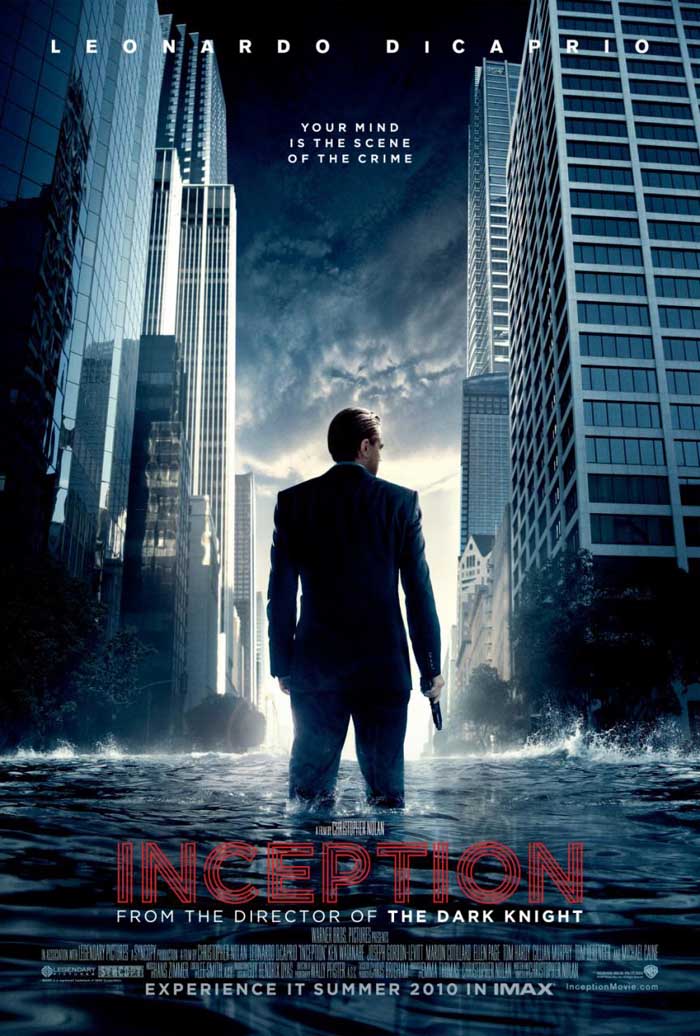
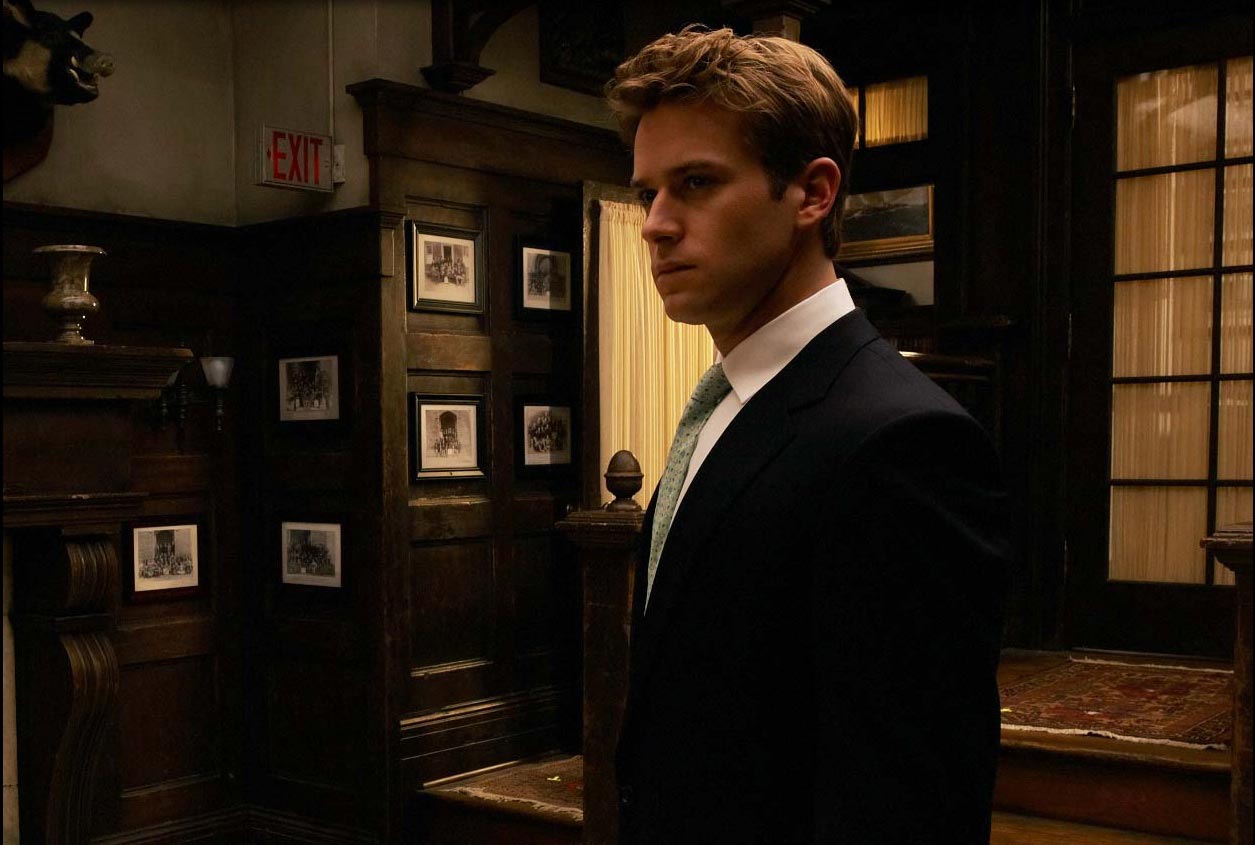
On the surface, it would seem that Inception fits squarely into the Nolanesque mold I've described—perhaps even epitomizes it: protagonist Cobb (Leonardo DiCaprio) muddles through illusion imposed upon illusion with his ragtag crew, all the while fighting off his own mental demons. Indeed, the basic tenets of the formula remain intact—a focus on the power of the mind, the leading man's self-deception—but ultimately, it's only enough to convince me that my Christopher did, in fact, have something to do with this wooden mess. From where I'm standing, Inception lacks any of the self-referential depth that characterized each of his previous endeavors—&, in that way, is an utter disappointment, precisely because it had the potential to be his most poignant film yet.

But I'm getting ahead of myself. Let me first say that yes, this film is stunning—truly a technical marvel, the kind for which movies were meant. I'm a sucker for cinema as spectacle, & Inception doesn't disappoint: Paris flips over on itself, Joseph Gordon-Levitt kicks ass in an anti-gravity Bingo roller, on & on until your eyeballs ooze over. Really—it's distinctly visually pleasurable.

Unfortunately, this is perhaps my only positive comment; even such basic points as casting & characterization somehow went hopelessly awry. Was I alone in feeling absolutely no chemistry between DeCaprio & Cotillard? DeCaprio & Page? Page & anybody? Was anyone able to sympathize with any of these characters—to see them as more than two-dimensional sketches dutifully cranking the gears from sight gag to sight gag?

More pressing, though, than these superficial complaints is what I see as an unforgivable thematic oversight: that is, just how little this film about dreams has to do with the actual experience of dreaming. For example: When you dream, do you remember—much less bring with you, sentiently—the items you had in your pocket? Would you wake up if tumbled more than 360˚ in a car crash? Honestly, it even seems to me against the very nature of dreams that someone else should be able to construct them for you. I understand that the thrust of the film is to create seamless Realities within Realities, thereby harking back to some basic Cartesian skepticism (How can we ever really know we're not dreaming??!), but I would argue that the figure of a separate Architect forces the film to castrate its own concept—that what makes dreams interesting at all is how rooted they are in the specific unconscious of the dreamer.

Because dreams are, in a sense, the ultimate self-delusion: in sleep, your mind free-associates, finding proxies for your anxieties, hopes, fears, casting them around in a ghoulish half-light to form a playful rehash of your daily experience. For this reason, dreams tend to be utterly personal, often unrecountable, & rarely sensical in the least. Again, I understand that, for the purposes of the film, it was necessary to render them slightly more causal, more life-like, but I still think that there could have been a more effective middle ground. If, for example, Ariadne was asked to trail the Cillian Murphy character in order to better understand the kinds of structures he's used to seeing; if she had to steal his journal, engage him in a conversation, run him through some MacGuffinish scanning machine, even—anything to show that the dreams she creates are necessarily specific to their dreamer—then I would at least have been partially appeased. As it stands, Inception's "dreams" are ultimately no more than planes (or, honestly, videogame levels)—mere canvases on which action is allowed to play out. & thus, in my opinion, is a huge opportunity wasted—for poignance, for depth & mindfuckery, for traditional Nolanesque genius—because what quotidian illusion is more dream-like than film?

Whereas The Prestige used its magical subject matter both to entertain & to comment on the nature of entertainment—the nature of its own medium—Inception refuses to take this obvious leap, except in tiny, momentary glimmers. Consider the scene in which Cobb first teaches Ariadne about Dream Architecture: We open on a shot of the two at an unremarkable Parisian café, rehearsing various plot points. Halfway through the conversation, though, Cobb stops & asks Ariadne if she remembers how they got to where they are. Page's face scrunches, Juno-like: she can't remember—&, of course, neither can we. We take the language of film so for granted that when this scene cut in from the former, we automatically inferred their travel to this point. & so, too, in dreams—as Cobb goes on to remind her (& us)—does scene mesh against scene, often without direct explanation.

In a moment of generousness, I think I can see my favorite symbolic trend straining towards Inception's surface: with a not insubstantial reach, one might say that films are our Shared Dream, the director our Primary Dreamer & our Architect, all in one. We viewers enter his world, play by his rules, & together have a common peek inside his head. Still, even this shaky inference pales in comparison to the film's latent potential—what I legitimately expected from the moment I first saw the trailer:

Imagine, for instance (as I did, in my jittery anticipation), that, at some point in the film, Cobb realized his whole life as a dream-thief on the run was itself a dream—if, rather than going deeper & deeper into a reality we know is constructed, then returning to the level on which we began, we backed out a few steps from what was presented to us at first. Wouldn't that raise some far more provocative questions about the reliability of our perception—both as human beings & as moviegoers?

Memento's ultimately unreliable narrator implicitly invites us to call our filmic perception into question, thereby heartily bamboozling us several times over, & Inception seems to want to do the same (or perhaps even more), but it never quite gets there—that is, until the absolute last second, when Cobb's top just barely wobbles before the screen goes black. "Was it all a dream?!" we're meant to gasp, but by then, it's too little too late. I understand the appeal of movies that leave you thinking—revel in them, in fact—but I pity the film that does so at the expense of taking this complexity on as real subject matter, & all for the sake of a cheap pun: that Inception is itself an act of inception, with Nolan as the agent, planting the question of Reality in the heads of his viewers.

For my part, I like to imagine that there is a grand & beautiful secret being thrust upon the unwitting masses: Inception is, in fact, Cobb's dream—but not this Cobb: the impossibly cunning thug of the same name from Nolan's debut film, Following. This Real Cobb—who, in his film's final shot, disappears unrecognized into the bustle of a London street—is feeling guilty about his life of crime & betrayal, his devotion to his boss, the loves & friendships he's damned in order to maintain his mercenary autonomy. So, one night, he sleeps uneasy: he dreams that he's an American on the run who must destroy a patriarchal company, that his past crimes will somehow out unwittingly to those around him—that he can never escape his life of grifting & self-imposed illusion. Following-Cobb concerns himself so intimately with the fact that everyone keeps a physical box of personal mementoes; it's not the world's biggest stretch to see this "box" replicated psychically in Inception-Cobb's Elevator of Regret.

Sure, it's highly implausible, but who knows. It's just a thought, after all: that fantastical parasite, gnawing at my brainstem—the dream I've constructed for myself to counteract this otherwise crushing letdown.


Today's Headphone Fodder:

Gravity—Nico Vega.

I first heard of Nico Vega the night I saw them, accidentally—opening for Semi Precious Weapons at that show I so raved about—& it was, without question, Love Instantaneous. They are simply brilliant: heavy rock aesthetic with powerhouse female vocals, lyrics just to the left of obscure. This song in particular is dangerously close to Perfect: quick, raw, no punches pulled. Speaking of which: the video is also pretty excellent.

Sunday, September 12, 2010

A Tiff With Christopher Nolan, Part 1 of 2.

Oh, Christopher Nolan. My love, my main man. Perhaps my favorite director—or, well, one of ten—until this.


& this.


& this.

[ Okay, this last one is at least kind of hilarious: Nirvana baby with muppet limbs, says I. ]


Why, Christopher? Why, after an utterly, undeniably brilliant career, would you choose to spend your bazillion dollar budget on a lifeless, incoherent, awkwardly cast action movie? Did you really think Ellen Page was an acceptable choice? Or Marion Cotillard, for that matter? & why can you kill dream bad guys? Why is "Limbo" an awkward rip-off of the oceanside scene from Pierrot le Fou? Why was this movie, which could have been so cool, just so goddamn uninteresting? Why, Christopher? WHYYY?

Ok, let's end the fantasy conversation with a man who has no awareness of my existence & focus on what's going to happen now: My goal, by the end of this two-part entrystravaganza, is to explain both my (apparently rare) utter displeasure with
Inception & my love for the genius that is (or, was) Christopher Nolan. Actually, I think I'll do it the other way around, because to understand why I was so unhappy, I think it's important to understand what I was expecting &, therefore, how far this movie fell from my estimation—& from its lofty predecessors—leaving me with only the sourest of parental disapproval: that worn, head-shaking, "I'm just so disappointed in you, Christopher..."


Part 1: The Best Damn Magician Movie You Will Ever See.

As a specific point of comparison, though all of his previous writer/director endeavors—
Following, Memento, The Dark Knight, &, okay, maybe not Batman Begins—would do, I've chosen what I think is by far one of his best films: The Prestige. I know, I know; Memento is brilliant, can't be beat—but hear me out. & if you haven't seen The Prestige, pretty please, close this window, open up
some obscure Russian pirating site
Netflix & make it happen. (Seriously: as much as I'd love for you all to read my ramblings, they'll spoil it & then some, & that's the last thing I want.) For those of you who have seen it, though, a quick refresher:

The movie chronicles a rivalry—that is, a years-long, death-dealing, limb-maiming back-&-forth—between two turn-of-the-(20th)-century stage magicians, Alfred Borden (Christian Bale) & Robert Angiers (Wolverine). Both are impossibly dedicated to their craft—&, after a tragically mistied knot, to one-upping the other, in illusion & in life, though it soon becomes clear that these men have difficulty distinguishing. Meanwhile, on the periphery of our story bubbles another feud between great rivals: Nikola Tesla, played by David Robert Jones, & Thomas Edison, played by the Fear his omnipresent henchmen inspire. Tesla—with the help of his assistant, Gollum—works on the cutting edge between science & miracle, & is therefore referred to throughout the film as a "wizard," a man "who can actually do what magicians pretend," but persecution by Edison's agents has sent him into hiding—that is, until Angiers calls upon him to help oust Borden once & for all. Throw in some standard Personal Life Issues, a phlegmatic-as-ever Scarlett Johannsen, Michael Caine playing Michael Caine, & you're ready to embark on a whirlwind exploration of magic's darker side, the pains of true obsession, &, above all else, the fickle delight of self-delusion through cinema.

But before any of this—before you can watch these two-plus hours of magical derring do—Nolan presents you with the Rules: three simple tenets of your basic magic trick, as explained by Sir Caine's distinctive patter:

Every magic trick consists of three parts or acts. The first part is called the Pledge. The magician shows you something ordinary: a deck of cards, a bird, or a man. He shows you this object—perhaps he asks you to inspect it, to see that it is indeed real, unaltered, normal. Of course, it probably isn't. The second act is called the Turn. The magician takes the ordinary something, & makes it do something extraordinary. Now, you're looking for the secret. But, of course, you won't find it, because you're not really looking. You don't really want to know. You want to be fooled. But you wouldn't clap yet, because making something disappear isn't enough; you have to bring it back. That's why every magic trick has a third act, the hardest part: the part we call the Prestige.
Because this is, of course, what you've tuned in to see: behind the scenes of magic shows, the inner workings of the impossible. & so you do, for a decent portion of the film: bullet catches, water escapes, foldaway birdcages, all laid bare to your eyes, act by act, enough to take the sheen off stage magic entirely. That is, until Tesla gets involved.

In a last desperate competitive act, Angiers seeks out the shunned scientist to commission a machine that can rival Borden's Transported Man illusion—in which
Borden appears to teleport across the stage in an instant, quick enough to catch a ball he tosses from one side to the other. Though reluctant, Tesla constructs his approximation of what Angiers wants—which is, in the end, essentially a cloning machine, a device that creates a copy of whatever is placed in it, while also sending that copy several hundred yards away. Thus, by adding a trap door in the machine's base, Angiers can let himself fall below stage, while his clone carries out the trick's final act, making it appear as if he's transported miraculously; unlike his earlier attempt at duplicating Borden's trick, which required a boozy look-alike to take the bows in his place, Angiers can now enjoy his own Prestige—in both senses of the word.

& still, mess ensues: it becomes necessary to dispense of the clones, so when the Angiers who presents the trick falls through the trap door, he lands in a water tank, which locks, drowning him. Every time Angiers performs the illusion, he kills himself—or, rather, a part of himself. Blackest means for brightest ends; when a man remarks that the Machine must have "some disappointing trick" underneath its bells & whistles, the ever-wise Caine replies, "Most disappointing of all, sir: it's real." & so, a movie that would appear to disenchant ends up championing simple stage illusion by making explicit the horror inherent in Real Magic. In the end, it's a parable about not watching too closely, about being content with deception & bemusement.

Of course, this parable takes on a far greater significance when one reflects upon the medium in which it's presented. For example: early on in the film, when Borden & Angiers admire the dedication of another magician—a man who always pretends to be frail in public, in order to better conceal the strength that his tricks require—Borden remarks: "Total devotion to his art. Utter self-sacrifice. It's the only way to escape... all this." As we later learn, Borden is hinting somewhat at himself & the sacrifices he makes: living only half a life, sharing a persona with his twin in order to hide the Transported Man method. However, the comparison becomes especially potent when one considers what a devoted actor Christian Bale is—
dropping over 100 lbs, gaining them all back in muscle, donning any accent thrown at him, each time for a diametrically different role. Both Borden & Bale (really, any actor) necessarily share this desire to escape themselves, to transcend the bounds of their own specific flesh—& how better than to be immortalized in celluloid as someone else?

& consider this: when all is said & done, both men die over the course of the film, & both return from death. Like a deck of cards or a bird, they disappear—into noose or water tank—& are brought back: Borden, by his twin, Angiers by his clone, reappearing in real life just as each once did onstage. It's magic: movie magic. The film itself is the Transported Man illusion, a trick played out over a two-hour canvas; recall the first line: a disembodied whisper, "Are you watching closely?"

Ultimately, The Prestige is itself the Prestige of a far greater trick: that is, Nolan's ability to involve you in his story, to bend your sympathies, your heart rate; to make you see Robert Angiers instead of Hugh Jackman, North London instead of Los Angeles; to show a single man twinned, a living man's corpse. The three acts of a magic trick reveal themselves to be the three acts of a screenplay, & we understand why we've been watching all along: as Angiers lies dying in the film's final moments, he chokes out one of the most eloquent explanations I've heard for why people engage in art, & especially in film:

The audience knows the truth: the world is miserable, simple, solid all the way through. But if you can fool them, even for a second, then you can make them wonder.

Such dazzling, effects-heavy movies offer exactly this kind of escape from the vulgar & the mundane—& yet, still, as with stage magic, the audience rides a razor-thin line between buy-in & skepticism, always begging to be let in on the secret, while simultaneously hoping against hope never to know. We can never really
believe what we see in a film, because somewhere behind the emotion it conjures, we see familiar famous faces, feel the scratch of theater seats; because, as Angiers himself points out, "if people really believed the things I did"—cloning & murdering countless Hugh Jackmans, chopping off Christian Bale's fingers—"they wouldn't applaud; they'd scream."

& so, Angiers finishes his speech, falls, & Michael Caine's dulcet tones re-recite the opening explanation—now worn with new significance: scanning over the resurrected Borden, Tesla's duplicated tophats, one of Angier's hundred bodies floating lifeless in a water tank—& we are reminded, almost explicitly, of the most simple of truths, the one we dare ourselves not to confront as the credits draw ever-nearer & overhead lights threaten to shock us back to Real: "Now, you're looking for the secret. But you won't find it, because, of course, you're not really looking. You want to be fooled."

This concept is something that I think is present across all of Nolan's work: the immense power of our own minds, & the danger inherent in the supreme pleasure that fictions pose. Nolan's Batman, as the prototype of a self-made superhero, is constantly presented with his own mortality, his own limits—but, as the Dark Knight himself glibly remarks, he "can't afford to know 'em."
Following's nameless leading man spends his time "shadowing" strangers as a cure to loneliness or boredom or both, creating dramas & mysteries into which he can escape, even at his own peril. Leonard Shelby, memory-lost protagonist of the backwards Memento, is ultimately a self-perpetuating serial murderer who sets himself up to forget his crimes—&, in fact, to kill the only man who might make him realize the truth. These characters are troubled men—lost in themselves, prisoners of their own worlds—all of whom brush up against the deliciously metafilmic implication that illusion can be balanced equally with fact, that the mind is truly the last great frontier.

That said, stay tuned for Part 2: Along Comes Inception.


Today's Headphone Fodder:


Tranquilize—The Killers (feat. Lou Reed).

Yes, I've been on a bit of a Lou Reed kick recently. Something about being back in New York City, I think: streets that hum with vulgarity & wildness; dirt & plastic rubbed deep into the sidewalks by countless pairs of big black boots. This song, though, is relatively new—to me, at least—& really surprising, because of all bands to have a deep enough appreciation for Lou to write a song so perfectly in his style, I would have placed the Killers (quick & cheap & soon extinguished; "Mr. Brightside," echoing like ping pong balls through a 2007 skull) around the bottom of the list. Still, I find this really wonderful—catchy, interesting, well put together, with that bizarre turn of the horror movie children's chorus halfway through.
I was just sipping on something sweet, sing the young & the old man together, & I feel a little twinge, a glimmer, like some things are indeed worthwhile.

Wednesday, September 8, 2010

An Impassioned Defense of the 10-Minute Song.

Now, let's get one thing straight: this is not a defense of Jam Bands. In my mind, Jam Bands are like a persistent STD—omnipresent, difficult to get rid of, born of genuine good intent but then just the absolute worst. Oh, the endless guitar wanking: when someone confesses their love of Phish or the Animal Liberation Orchestra, I have to struggle not to equate it with a love of ritual murder or the Great Lord Xenu. I just want to make this abundantly clear: never will this Blogling ever say positive words about songs that ramble self-indulgently in braindead, hash-fueled "improvisation."

However, there comes a time in many an artist's life when two verses & a bridge just won't cut it, when rock's customary three minutes need expanding—tripling, even—to encompass the depth & breadth of a single stab into the Void. Too many lyrics, too many chords: statements that just can't finish fast, that require some meandering. As a lover of the Dirty, Dirty Rock 'n' Roll, I tend to prefer my music fast & loud; almost all of my favorite songs clock in under average. Still, I feel it's important to salute these musical tomes, ideas too big for single digits—&, on that note, to distinguish these structured, chugging trains of thought from the vague stupidity of Jam. Here, now, is (roughly) 100 minutes of music in 10 songs.


Station to Station—David Bowie.

Well, of course the first one is Bowie. Which is frustrating: by the time I actually finish this mammoth essay of a Bowie entry—which I honestly am writing, steadily steadily, swear to Gawd—I will have already said everything there is to say, spilled out in blips these past few months. Because really, I can't help it; David Bowie just takes up an inordinate amount of my brainspace. Anyhow, on to the song, which is truly divine. If you're at all interested, I recommend picking up a copy of the 33 1/3 series book about the album "Low," which, as a sort of preamble, includes a fascinating, in-depth discussion of this song, explaining facets from its production to its mythic themes. But for now, I'll just say: this song is a prime example of one that just has to run over 10 minutes, shepherding you appropriately from station to station, movement to movement: instrumentals to slow-burn vocals to one of the absolute greatest rock surges in history. (Skip to 5:00, but only if you must; like so much in life, it's better if you wait.)


Cygnet Committee—David Bowie.

Okay, of course the second one is Bowie, too. But allow me the juxtaposition—of phases in his career (the former, coked out & jaded in L.A.; the latter, a young, Dylanesque balladeer), but also of 10-minute-ness: unlike Station to Station, with its distinct series of parts, this is one of those songs that just has too many lyrics, too many ideas. Weaving through them slow, dream-like; never changing or picking up too severely, flowing gently from start to finish—until the very end, crying out loud & hopeless. & oh, those words: I bless you madly, sadly as I tie my shoes...


Bela Lugosi's Dead—Bauhaus.

Though this song has, of course, already been featured hereabouts, it was in an abbreviated, specifically filmic format. Now, I'd like to present it in its glorious 9:34 entirety: full of bizarre, ambient clatters & zooms—like walking through a nighttime haunted house, tripping over synthesizers.


American Pie—Don McLean.

An anthem for a generation, nonsensical chorus & all. I often sing this song to keep time; it's about 8 minutes all told, & the surreal images trip over each other with entertainment to spare, making it perfect for passing iPod-less waits.


Turn Blue—Iggy Pop.

A prime example of the genius that is Iggy's bizarre & beaten brain. He rambles & squeals, caterwauling his way into your heart: Oh, Mama, I shot myself down & up & down & up... The live version on the "Iggy & Ziggy, Cleveland '77" album is particularly excellent, too—different, of course, because you can never trust that man to say the same thing twice. (Also, if you listen close, you can hear Bowie on back-up vocals...)


No Conclusion—Of Montreal.

Poppy & upbeat, with the most morose of lyrics: Morrissey-esque, perhaps—but only if the Smith had taken a few dozen percocet. Trance-like in its length & repetition, but not unpleasantly so; sliding discreetly from movement to movement; a song that doesn't want itself to end, skipping like the broken record of a stale relationship.


Jesus of Suburbia—Green Day.

I mean, I know—it's Green Day, the "punk" rockers that just won't die; persistent & plastic, 40 years old in cheap eyeliner, now on Broadway—& still, though that "Wake me up when September ends" song sits like a great big spike in my temporal lobe, you have to admit: they've survived because, quite simply, they're great. & so is this song.


Paradise By the Dashboard Light—Meatloaf.

I actually can't get enough of Jim Steinman's style: the progressions he picks, his way with lyrics—jaunty & matter-of-fact, but always ballad-worthy. This song is catchy as a catcher's mit, cheeky, hilarious—a must-have, truly. & the drawn-out baseball innuendo is priceless.


Land—Patti Smith.

Patti Smith is distinctly talented at putting words together. That's really the only way I know how to put it; how else to explain lines, like Aw, pretty boy, can't you show me nothin' but surrender? I could listen to her ramble about Rimbaud for days. & speaking of surges, the beginning build-up—that insistent, pounding chant: Horses! Horses! Horses!—is pure bliss, a shoulder-tensing war cry for the ages.


& finally, Today's Headphone Fodder:

Heroin—The Velvet Underground.

How to qualify this song in words? The beauty is in its unraveling: the cannibalism of screeching violins, building, building; the simplicity that cuts (hard, knife-like in accuracy) against addiction; peaks of waves rising & crashing like the endorphin-adrenaline rush before vulgar self-destruction. In form & function, it is simply brilliant—every minute paced perfectly into the next. Shivers, I tell you—every fucking time.

Wednesday, September 1, 2010

Raw Power.

After a night of ringing ears & too-stomped feet—a night on which I can proudly say that I danced onstage with (& touched, twice) (!!!!!!) one of my most idolized of idols—I feel I must take this time to salute the Godfather of Punk, the World's Forgotten Boy: Iggy Fucking Pop.


[ My sole attempt at a picture onstage. For obvious reasons, I gave up quickly & danced my ass off to "Shake Appeal." ]

This entry came quick—poured out with endorphins & sweat—because unlike Bowie, who is enigmatic, cerebral, fading in & out in shades, Iggy is simple; raw; the absolute strongest, most feral distillation of Rock & Mother Fucking Roll. At 63—sixty-three—this utter fireball of a man, with skin burnt & sagging over straining muscles, veins spidering out in raised squiggles on his left shoulder—this dilapidated, drug-collapsed shell of a body stage-dived, thrice, flailed & screamed like he was boiled alive by every guitar wail, every thrum of the bass, slap of the snare. There's a passage of his from Please Kill Me (required reading, for every human) that I think about constantly, every time a song gives me goosebumps:
I wanted the music to come out of the speakers and just grab you by the throat and just knock your head against the wall and just basically kill you. That’s want I wanted. And it never did that enough for me. No matter what I did, I couldn’t get it. I couldn’t get the treble to hurt enough, I couldn’t get the bass to hit you enough, I couldn’t get the beat hard enough, and so on, and so on, and so on. So I kept doing mix after mix after mix until I was crazier and crazier. But it still was not hard enough, you know?
& this is what I will always love most about Iggy: that he recognizes—&, in fact, strives for—that moment when music transcends its sound waves & crawls through your pores, tingles toxic in your blood until, flesh heavy, you have to fucking thrash it away: writhe like the exorcised, like leeches, cutting out your heart for the Gods. Music is never so good as when it hurts—but even then, there's music & then there's music & then there's Iggy Pop, operating on another plane: that level just past tangible, reaching down your throat & taunting the beast that lurks behind your bones. Raw power—& honey, I can feel it.

Photobucket

Hallelujah.

Today's Headphone Fodder:

Gimme Danger (Live at the Whiskey-a-Go-Go, 9/16/73)—Iggy Pop.

Sometime, somewhere, someone told me that poetry can be defined as the least number of the most beautiful words. If so, then Iggy Pop is possibly the most talented poet I know, spilling forth lyric after lyric, most made up on the spot: utterly bare-bones phrases that are somehow more right than anything else.


Give me danger, little stranger, & I'll feel your disease.

& on & on. Some of the brevity is intentional: when Iggy was starting out, he would write songs like letters to Soupy Sales—that is, in 25 words or less. (No fun, my babe, no fun—a whole verse & only four!)

Still, where it really gets me is in the improvisations, the deviations into raw, unscripted soul that you're likely to find on any live recording of his. Like in this version of "Gimme Danger," with its desperate, ad-libbed bridge: "& I, I wanna be touched, & I’m a'gonna be loved," devolving quickly to the base "& I want, & I need." Just a subject & a verb, & still they slice—just too honest; simple & perfect: poetry.