Showing posts with label Aaron Sorkin. Show all posts

Friday, June 3, 2011

Rejected Little Boys: Some Thoughts About Odd Future.

[ A (Pseudo-)Topical Preamble: So, the Rapture happened. My guess is, if you're reading this, you weren't sucked into some kind of vortex, yeah? Well, neither was I. So, I guess we can stop hating gay people in the name of God now? Right? Don't we basically have empirical proof of his noncompliance with the verbatim dictums of the Bible—à la Jesus's lessons to the Pharisees in Matthew, when he explains that the most important thing to do is love your neighbor, not castigate him based on the banal edicts in Leviticus? Ah, well—food for thought. Now, on to our regularly scheduled programming. ]

Some months ago, as some of you may remember, I posted a couple of songs by the up & coming rap collective Odd Future (or, OFWGKTA)—one of which was the much-hyped video for "Yonkers" by the group's founder, Tyler, The Creator. As a piece of promotion for his recently released album, Goblin, the song worked wonders, popping up everywhere, garnering hits & views galore, primarily—& I stand by this—because it's kind of brilliant. As I said at the time, the video is "really, artfully disturbing, all the more so for its simplicity"—&, meanwhile, the song itself trips lyrically skilled, with lines like I slipped myself some pink Xannies & danced 'round the house in all overprint panties—which, at least to me, at the time, seemed a somewhat braver broaching of the "homo" line than most established rappers would dare.

& so, with toes dipped only so far into the Odd Future phenomenon, I shrugged off critics' alarmist reactions to, say, his invocations of V-Tech & Columbine; in general, when it comes to issues like this, I tend to agree with what Tyler opines on his eponymous track:

They claim the shit I say is just wrong /
Like nobody has those really dark thoughts when alone /
I'm just a teenager...


& it's true: he is, & they are, & in the end, this is—as he makes sure to point out in an awkwardly placed "Random Disclaimer"—fucking fiction, his form of self-expression. Indeed, as an avid analyzer of gorefest flicks, even an eager consumer of chainsaw-sharp wit, it would be massively hypocritical of me to deny anyone their violent fantasies, those artful exorcisms of dark demons that otherwise trapped might wreak some real havoc. As far as I was concerned, Tyler was in the clear, & "Yonkers" continued to rack up playcounts, including plenty from me.

However, the more of his material I heard—snagging all the old free downloads, really taking it all in—the more I found it increasingly, gratingly difficult to put up with Odd Future's essentially omnipresent woman-bashing. Take, for example, this verse from "She (feat. Frank Ocean)":

1, 2, you're the girl that I want /
3, 4, 5, 6, 7, shit /
8 is the bullets if you say no after all this /
I just couldn't take it, you're so motherfuckin' gorgeous /
Gorgeous, baby, you're gorgeous /
I just wanna drag your lifeless body to the forest /
& fornicate with it, but that's because I'm in love with you /
Cunt.


Threats of violence, pseudo-prostitutional coercion (re: "But I bought you dinner!"), "I only do it because I love you" vileitude, desire for a woman who's nothing but a body, date-rape/serial sex offender imagery, rounding it all off with a slur—I mean, it's almost impressive the gamut this relatively quick verse runs. Then, of course, come Tyler's bevy of especially fun lines, of which I'll provide only a small fraction, including some from pre-Goblin endeavors (which, for the record, I tend to like better):

God damn, I love bitches /
'specially when they only suck dick & wash dishes /
cooking, cleaning, grant my wishes /
& make me & the Wolf Gang sandwiches
(Transylvania)

Fuck Tyler, I'm'a change my name to Uncle Phil /
'Cause every girl I fuck, it's always against her Will
(Splatter)

Now you gotta spat, spit it out until you scat /
Then you gotta sat & shit it out, bitch, fuck your feelings /
You wasn’t feeling shit when you was down there kneeling /
Now shut the fuck up you got another dick to deal with
(Boppin' Bitch)

Compliment her tits & then it's off to hump her /
Fuck her in a Hummer, well I rape her, then I put her in a slumber /
It's not a figure of speech when I tell you that I dumped her
(Assmilk)

Fuckin' in my white van /
beat her with a nice white nightstand /
until I give her gashes where it's nothing but the white meat
(Blacc Friday)

Game of duck-duck-duck tape with a dead goose /
She running around this motherfucking dungeon, her legs loose /
Until I accidentally get the saw to her head, oops /
Victim, victim, honey you're my fifth one /
Honey on that topping when I stuff you in my system
(Tron Cat)

Now, fans of the band will no doubt jump all over me for that last one, because, of course, "Tron Cat" is a character Tyler raps in—comparable to Eminem's "Slim Shady," for lack of a less obvious correlate—the "voice in my head, telling me to do all this fucked up shit ... this shit that I don't wanna fuckin' do," as Tyler explains to his interpolated, voice-distorted therapist, "Dr. TC," at the end of the preceding track. Moreover, the lyric is obviously hyperbolic in, say, its suggestion of cannibalism—just like the first excerpt, from "Transylvania," could be defended as a comic recall of sexist tropes, ironic in its blatancy.

Still, I would ask you, gently, to please just look at the unrelenting trend here. Why is it that Tyler can't seem to bend his witticisms around some less hateful topic than degradation & rape? Why is it that the bulk of his dark fantasies aren't just violent, they're violent against women—&, why is it that, if this is all only a cathartic fiction, this blatant sexism sloshes over into even his least fantastical lyrics?

That's all I'm asking—but I think it's taken me so long to get here in part because Odd Future is so masterful at instilling real fear of dissent in their following. With accusations that critics don't get it, 'cause it's not made for them, interspersed with literal invitations for fans to join the gang, as it were (e.g., Odd Future, Wolf Gang / We came together 'cause we didn't have nobody else / & you? You just might be one of us / Are you?), they've created the most effective kind of Emperor's New Clothes groupthink: anyone who doesn't like it doesn't get it, & if you don't get it, you don't belong—& you want to belong, don't you?

The thing is, though, my intent is not merely to hate. In fact, I'm doing everything I can to "get it," because ultimately, I think it's redundant (& nonetheless done to death) simply to castigate Tyler & his cohorts for their clear & present bad taste. The ickiness of this rapey aspect is already apparent to anyone with sensory capabilities, & more importantly, I think the problem runs deeper than "Odd Future is misogynistic" or even "rap music tends to be misogynistic." I think the problem transcends music altogether—& that this very fact is, indeed, the problem.

For one thing, to snag another few lines from "Tron Cat":

I'm not a rapper, nor a rapist, nor a racist /
I fuck bitches with no permission & tend to hate shit /
& brag about the actions in a rhyming pattern matter /
Then proceed to sat her down when I go splatter in her chatterbox


Tyler (or his other alter ego Wolf Haley, or Tron Cat, or whatever amalgamation thereof we're listening to right now) doesn't consider himself a rapist—&, for all I know, he's not—but, just to be clear, someone who fucks bitches with no permission can't not be. (In fact, that's the most clear-cut definition of a rapist.) There is a line, to be sure, between word & deed—but the line seems to be ever blurring, perhaps because of these ever present words, between acceptable rhetoric & acceptable behavior—what it's okay to rap about & what it's okay to do.

Meanwhile—& more to my main thrust—I've kept in the rest of the verse to highlight the fact that, simply put, he's fucking talented. Really: if I could turn off my English comprehension & just listen to these fast-colliding syllables, the experience would be nothing but welcome. Unfortunately, I can't, so I'll just have to stay disappointed that this is the way these quick-tongued kids have chosen to express themselves—that, rather than grasp always for honesty or complexity, they've let themselves fall into one of the oldest wound-licking tropes. Indeed, in our culture, this predatory demeaning seems to be the standard for any dude down on his lady luck—rhetoric that's both accessible to & acceptable for rejected little boys who feel entitled to women's bodies.

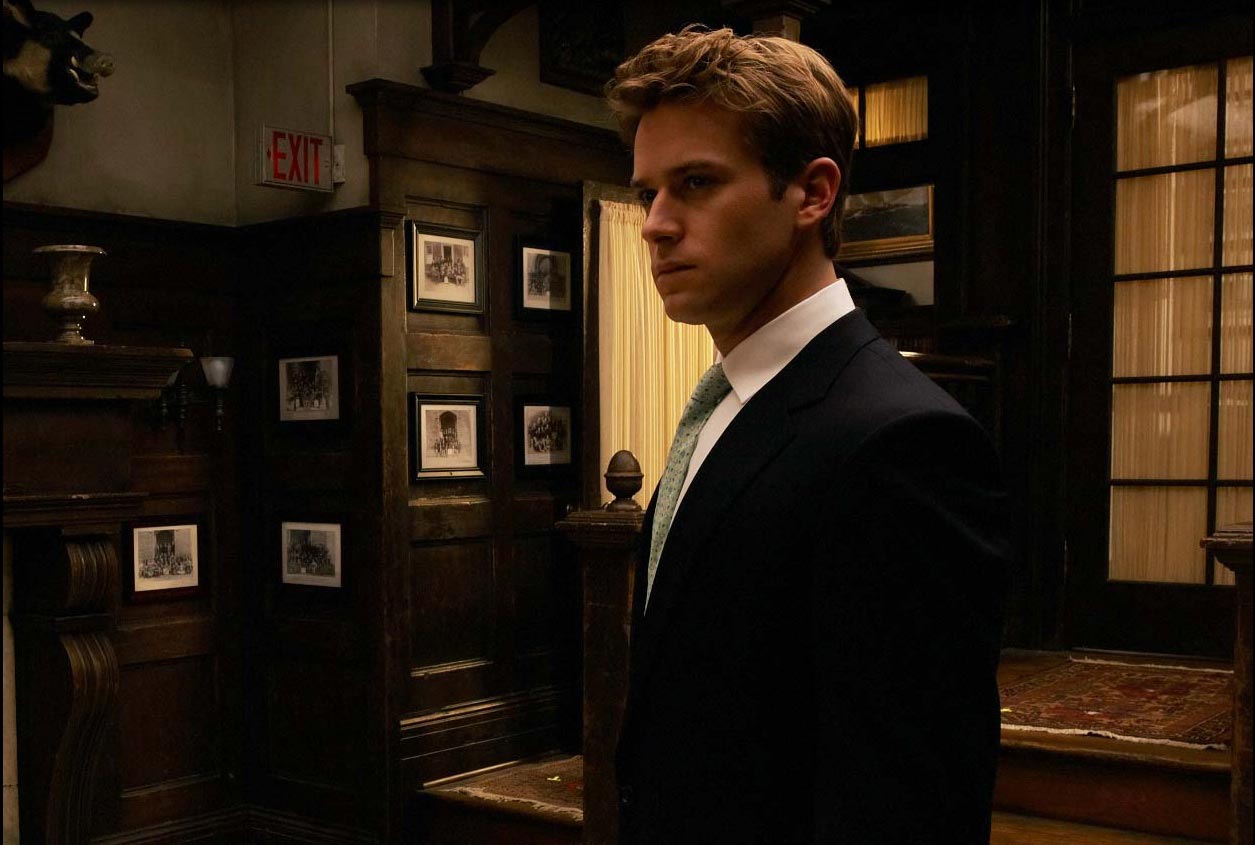
Think back for a moment, if you will, to The Social Network—why I still can't stop gushing over Sorkin's achievement—because it plays out accurately & expertly this phenomenon that media so rarely explore with enough depth: the real, emotional pain felt by romantically snubbed young gents, & how that so often translates into the worst kind of misogyny. For example, the very first scene, the set-up for this tale of near-Machivellian revenge, is a break-up—a sudden, soul-crushing, character-lacerating dumping, to be exact—& what does our derided hero do? He sits down at his computer & writes "Erica Albright's a bitch," then proceeds to craft "Facemash," a comparative version of "Hot or Not" that directly objectifies his female classmates (only slightly more humane than his initial idea of comparing the women to farm animals).

Though this lady-centric thread soon gets trammeled up in a general theme of rejection—of geeks previously outcast seizing power in the technological age—it is by no means forgotten, if only because the last few heart-wrenching moments show Mark still desperate to connect with his former flame—&, moreover, because it's littered throughout the original script. For example, when Eduardo is later trying to explain why Mark didn't actually regret this much-derided first "Face-" foray, an early draft reads (on page 43): "With Facemash, he'd beaten the Harvard computers, he'd beaten the Ad Board, & he made the girls mad. Facemash did what he wanted it to do." (The film features a similar line, with the female element excised.) In short, Sorkin clearly sees what's up: that, when confronted with rejection, it's easy for boys to take a sexist society's cues & lash out at the entire female gender—objectifying these worthless sluts & whores, making them less-than—if only to avoid admitting that, maybe, there's something about themselves that was, in this case, unlikeable—to make theirs a categorical turn-down by that bitch Womankind, nothing that could possibly be their own fault.

&—to pop back from our tangent—this is exactly what I see going on with Odd Future, as evidenced on Goblin by the solo stand-out "Her":


See, this is probably my second favorite song on the album—or, well, one of the few that doesn't make me cringe every few verses—because it's so clearly, painfully honest, even relatable:

She's so pretty, fuck self pity, I feel so shitty /
I wanna text her in a jealous rage /
But if she reply to say anything, I'm'a smile I know


I mean, really: we've all been there—second best once again, watching the romance we wanted through glass—enough to know it's a place no one wants to be. For another concrete example, the second song I posted in February—"Luper," by Tyler's missing bandmate, Earl Sweatshirt—tells a similar story: Earl's just been dumped, so he wallows in wonderfully alliterative metaphor—because when she left, it didn't break my heart, it broke my torso—but, when he sees her with another guy, things turn suddenly ugly:

The basement light is darkened & the switchblade is sharpened /
Her name on my arm & her face on a two percent carton /
See her face while you're fixing your breakfast /
& know she's in my basement, objecting to sex with /
me, murder spree, surges on with the next bitch /
Tombstones read RIP 'cause it's pieces they rest in.


There's no denying that rejection, put plainly, sucks. Nobody wants to feel unwanted, & seeking some relief from that kind of pain is more than understandable—is even, according to German theorist Ludwig Feuerbach, the origin of the religious impulse: that we absolve ourselves of any guilt at not measuring up by abstracting our best qualities (e.g., omnibenevolence) to God & thereby claiming them fundamentally, categorically unattainable. If we couldn't have them in the first place, then it's not our fault for failing—a statement that soothes both mortality & unrequited love.

However, in this sex-centric case, the problem rears its head when these boys, from Zuckerberg to Sweatshirt, use the cheap anesthetic our culture hands them: loudly claiming that the women who reject them, & through them women in general, are bitches & sluts whom they'd prefer to look at or fuck (or even rape) than acknowledge as people with brains & faculties & decision-making capabilities that could possibly have turned them down.(This is, I would assert, precisely why OFWGKTA are so openly disdainful of—or, really, threatened by—lesbianism, "dykes"—women who by definition have no interest in them.) Thus, this kind of extreme linguistic degradation also represents a form of fantastical catharsis, to be sure—one which Odd Future has gleefully enmeshed with violence—but one that I find far more problematic than its merely gory counterparts, because it takes place at the expense of an entire gender's self-worth—because the phenomenon it exemplifies really isn't so fantastical after all.

Take, for example, the very issue of access to this vengeful lyric idiom. If a woman were to go to similar heights—viciously, categorically lashing out at the male gender—she'd be labeled one of those feminists: the frigid, persnickety, uptight wet blankets whose misandrist overanalyses drain the fun out of everything, especially pop culture—who dare to think of themselves like people, not sex furniture, & who are thus adequately punished. By my count, it's the most-used line in every young lady's arsenal—the one that never fails to sound like nails on a chalkboard as covered by the Black Eyed Peas, even to my jaded ears: "Sure, I'm a feminist, but I'm not, like, a feminist," or some variant thereof—anything to dilute the image of a bra-burning, hairy-legged ball-buster. Even the Lady herself, if you'll recall, took pains to remind us that she's "not a feminist. I love men. I hail men"—savvily greasing the skids of her own success, because, in the eyes of our culture, that's the worst thing a woman can be: a man-hater. Meanwhile, as we speak, Tyler, the Creator, who could easily be described as a woman-hater—or, who, at the very least, has made a name for himself through the loud & repeated practice, however "fictitious," of woman-hating—is rocketing to the top of the charts.

My point is not to encourage a bevy of tracks about once-rejected women slaughtering captive male sex slaves in their dungeons (though, you know, one or two might be fun). My point absolutely is, however, to point out this clear discrepancy in how it's acceptable for men & women to express themselves—to underscore why it is I scoff at anyone still wielding the term "post-feminist," & to recognize how, on some level, this implicit gag order on female artists—&, really, females in general—is liable to leave everyday ladies floundering in surplus hurt, unable to tap into this wave of abstracting anger when facing their own instances of rejection.

Even so, I still assert that the solution isn't to level the playing field, but to do what we can to shut it down altogether: as I've tried to make clear but can only make clearer, I think there's quite literally nothing to be gained from including in the doctrine of Female Liberation the necessity to objectify & demean men in some twisted power reversal—if only because, well, we clearly don't like it very much, so why impose that experience on anyone else? People should stop being crappy to people—because, as far as I've seen, all these cross-gender revenge attempts & ironic sexist recalls only continue to churn the gears of a fundamentally broken system, in which even todays "exciting, new" musical acts seem helplessly, perhaps happily trapped.

So, sure, I'll still listen to the odd Odd Future track—because, for example, it can be gut-wrenchingly fun for everyone involved to shout "kill people, burn shit, fuck school," to thrash out aggression with expressly harsh syllables—but I'll probably be straying away from the majority that propose to lock people with my similar chromosomal pattern in a basement. Because ultimately, hearing lyrics like that can be not only unpleasant, but honestly, palpably frightening—because, sure, it's a fantasy, it's fucking fiction, but that doesn't make the sexism therein any less real, or any less pernicious. Though Tyler will probably never really be afforded the chance to stab Bruno Mars in his goddamn esophagus, he's prone (& even apt) to degrade his female concertgoers—&, moreover, honestly, even if these particular people won't actually perform the particular acts they tout, they undoubtedly feel they've been given the right to tout them. As evidenced by OFWGKTA & Co., these stomach-churning rape jokes represent acceptable, even praiseworthy paradigms in which to express male hurt & aggression—their violence-laced indignation just the chicken to our culture's seemingly unbreakable misogynistic egg.

& this is what freaks me out most about Odd Future: that their music—both in & of itself, & in terms of its widely laudatory reception—is emblematic of the fact that, whatever feminism has accomplished, it may have, in short, removed the cause, but not the symptom. Men still feel entitled to tower aggressively over women—both within their savage rhetoric & in their very access to it—&, as these upstart youngsters help prove, the next generation only seems to be sinking us further into the regressive mire.

So, though I recognize that these gents are talented—quick-witted, alliterative, riding plenty of other cutting edges—I just can't get past the blind, tired pandering it takes to perpetuate this hateful lyric trope, all its retro backsliding & ultimately cheap catharsis. For all that Odd Future are shaking things up, they seem to have forgotten that this kind of woman-hating is the oldest, meanest trick in the book, hardly worthy of their youth & creativity. Ultimately, to crib a bit from Tyler's wordsmithery: fuck the fat lady, it's over when all the kids sing about something that's actually radical—not just reactionary sexism dressed up like it's something to be gawked at.


Today's Headphone Fodder:


Loser—Beck.

Sometimes, you just really need to listen to this song. On repeat. For days.

This is one of those times.

Monday, November 22, 2010

A Breakfast Crisis.


[ So, I know I promised the Bowiethon—but this post happened in real time—& I felt so strongly about it—& then I made graphics—& I think we could use a little levity 'round here, yeah? So, here it is. Bowie next. Swear to Dog. ]

In a particularly good (& therefore memorable) episode of The West Wing, Josh Lyman's ever-eager assistant Donna informs him that "the definition of insanity is doing the same thing over & over & expecting different results." While I'm not sure if anyone aside from Aaron Sorkin actually defines insanity in this way,* it provides the perfect framework for a discussion I've been meaning to have with my brain for some time—but which I put off, of course, until directly confronted with it this morning.


To begin: I stayed up through woke up bright & early at 8:30 AM, perfectly primed to stretch, shower, & get in a hearty breakfast before my 10:00 class. Brimming with goodwill & cheer, I practically bounced up Broadway, waving & smiling, for all the world like a modern-day Belle greeting her small, provincial town—&, lo & behold, upon entering the dining hall, I morphed to awestruck Charlie in his Chocolate Factory: this was the fare before noon?! This glorious spread of fruit salad & frittatas!—yogurts & chicken sausage!—cereals upon cereals!—large to-go coffee cups!—&, then I saw it: the perfect, protein-filled start to my day, steaming, quietly, in the corner: Oatmeal. My eyes brimmed: it was as if the gods themselves had shone a beam of pure, distilled Glory on my day—nay, my life—with such a patently ideal offering.

So, of course, I forewent the home fries & granola, the quickly dwindling scrambled eggs, & jumped for this beautiful, brimming cauldron of— Okay, well, it looked a little like something regurgitated by a colic infant, but still! I was not about to be thwarted by mere appearance! My breakfast experience was about so much more: it was about substance & health & deliciousness—&, well, so what if it also tasted a little like something coughed up by a really, profoundly unhealthy infant... A Garbage Pail infant, who has spent a lot of time chugging Elmer's glue & sand... A mutant Garbage Pail infant with 30 phlegm glands, who has experienced turbulence coming from the planet Terrible in the galaxy of Oh My God What Is This Demon Food???

My point—exaggerated, perhaps, by recent experience—is that I hate oatmeal. I hate it with the burning passion of a thousand neutron stars. I find it utterly repugnant in every aspect—& yet, I find myself eating it, again, & again, & again. For some reason, despite all evidence to the contrary, I still, in the moment, consider oatmeal the most awesome of breakfast foods. If you were to offer me a bowl of Lucky Charms, in which the marshmallows were Mario immortality stars & the milk was unicorn tears & all the cereal pieces joined in a chorus of "Oh, What a Beautiful Morning" with the basso profundo of Robert Goulet—this, in exchange for some generic oatmeal, I guarantee you, I would choose the oatmeal every time. &, of course, three bites later, my day would be ruined, because I would realize, for the 8 billionth & yet somehow the first time, that I hate oatmeal.

It's eternally perplexing: for whatever reason, my brain has built up this Platonic ideal of oatmeal that just absolutely refuses to be disproved, no matter how many counterexamples I present. Now that I'm reflecting, I have only dour oatmeal memories from early years—the same three hopeful bites, followed by an unfailingly cartoonish frown. In fact, if we're talking childhood touchstones: in the musical Oliver!, there is an entire dynamic opening sequence in which a massive chorus of sympathetic orphan boys simply beg to eat anything but oatmeal—&, to top it off, young Oliver is banished from the workhouse for daring to request some more! & did I mention the mutant infant demon?!

It gets back to this idea of Sorkinesque insanity, I suppose: for whatever reason, I've developed a mental block when it comes to this puke-y breakfast cereal, & therefore decide, like Nancy returning to her Bill, that past wrongs aside, this time has got to be different. & yet, it's worse than a justification: it seems decisionless—amnesiac—like Leonard in Memento, who can't tell crazy, trash-talking Natalie from the victim he ought to protect—who, within a gap of only a few memory-lost seconds, mistakes the bruise he was provoked into giving her for the act of an enemy. It's a total brainwash, an irresistible Siren song: when approaching that steaming cauldron of snot, the only thought in my head is how much I love oatmeal, how I've always loved it, how lucky I should consider myself to have this rare chance to taste it once more... Honestly, it's important that I write this entry now, because I guarantee you that in a matter of hours, I'll be bounding back eagerly to ladle all over again.

I can't explain it—really, I can't—but I can identify plenty of other phenomena that conform to this Insanity pattern, at least in the life of Me. Here are a few:

Incense.
The only way I could think to illustrate this properly was in graph form, because this is just how I think sometimes.


Napping before class.
Because sleeping always—always—seems like such a good idea at the time. Luckily, my internal alarm clock has learned to seep into my dreams—often in the form of a plotline about the homework I should be doing—so now I don't so much nap through classes as right up until them, meaning I usually show up looking a bit disheveled, with sleep-hair & fabric grooves in my face.


Watching Law & Order: SVU.
See, even now, my lobes are whispering, like Grima Wormtongue, "But Anneliese, you love crime shows! & Law & Order is the greatest invention since fire! You should watch EVERY EPISODE, RIGHT NOW, RIGHT NOW." &, inevitably, someday, I will listen—head over to Netflix Instant & watch at least half a season—before I run into one of the countless episodes that engages in really unconscionable conservative moralizing (often revolving around crazy Elliot & his enormous, aryan family), at which I will become enraged, then despondent, realizing that there are a million, billion other things I could have been doing with my time—or, at least, a million billion better shows.


The Family Circus.
As edgy-scrumptious drug dealer Todd Gaines (played by my beloved Timothy Olyphant) articulates toward the end of Go:
Okay. You sit down to read your paper, & you're enjoying your entire two-page comics spread, right? & then there's the Family fucking Circus, bottom right-hand corner, just waiting to suck, & it ruins your whole experience.
So, why doesn't he just skip it?
I hate it, yet I'm uncontrollably drawn to it.

Preach, Todd. Preach.


* [ POST-SCRIPT: My post mortem research shows that someone besides Aaron Sorkin does, in fact, define insanity like Donna. His name is Albert Einstein. He did math or something. ]


Today's Headphone Fodder:


This is one of those songs that just magically ended up in my iTunes; I'm really not sure how I acquired it. However, it's pretty great: cheeky lyrics (someone should've told her that pretty ain't a job), interesting variation between chorus & verse—&, la pièce de resistence, an ORGAN, which has been massively underused in rock/pop music these past few decades.

Sunday, October 3, 2010

"We lived on farms, we lived in cities—& now, we'll live on the Internet."

[ Apologies, dear Reader, for these lengthy posting gaps. The school, it exhausts; the weekends, they overflow. Anyhow, here's a little something I've compiled, if hastily. Meanwhile, if you have any advice on how to best write five pages about Heidegger's Introduction to Metaphysics, please, give me a call... ]

Though I was initially quite skeptical at the thought of a Facebook movie, fearing fad-for-fad’s-sake vapidity, this script is a more-than-pleasant surprise: rather than merely chronicle or moralize, it explores the roots of our modern tendency to “live on the internet,” while also managing, against all odds, to engage us in the success of a revenging misanthrope. Sorkin’s dialogue whips and cuts brilliantly, slicing moment to moment, scene to scene, keeping his characters always two steps ahead of the audience (and, often, of each other); even at 162 pages, it has a jittery, breakneck pace—one that mirrors both Facebook’s rocket rise to fame and the immediacy of the internet culture it depicts. The parallels between Mark’s female trouble and his professional motivations, between old and new money, between socializing and “friend”ing are cleverly drawn and expertly revealed, making The Social Network both narratively entertaining and worthy of real thought about the ways we choose to connect in the new millennium.


That was what I wrote, caffeine-zapped at sunrise last Tuesday, after attempting to synopsize the script for a film class—what I wrote for the Comment section on my coverage, still a little shaken from reading 162 pages twice in three hours, still itching to read it again. That was what I wrote before even seeing the thing—& this is what I'm writing now:

The Social Network is, simply put, incredible.

You don't have to believe me; honestly, if it were me even a week ago, I would have laughed in the face of a statement like that. (Of course, at that point, I was unaware of the writer/director team responsible, but still:) In order to understand the enormity of my transformed opinion, you have to understand just how disdainful I was of this Facebook movie: how my hyperbole gland flared to the size of Montana, & I could be heard deriding from every street corner the apocalyptic, incestuous stupidity of a movie about a social network—let alone the presumption of that definite article! As Facebook slowly chomps away at every plugged-in member (yours truly included)'s last shreds of privacy, gaining truly ludicrous amounts of recognition from ad after ad, worming its way into everyday parlance (verbing nouns, truncating syllables left & right), I can only cringe & self-loathe & wring my hands—&, one would think, cast some serious hate at any movie that promises to glorify it.

But I won't—because it doesn't. Instead, The Social Network is a sympathetic if ultimately scathing look at modern communication—& the gentlemen believed responsible. Chief among them, of course, is Mark Zuckerberg—who is apparently fictionalized beyond recognition by Sorkin's script & Eisenberg's pseudo-Aspergian performance, but ultimately, the facts are irrelevant to its success: this Mark is a nuanced & delicate portrait of exactly the kind of socially inept brainiac who has been getting the short end of Hollywood's stick since The Breakfast Club—who, as the script notes on its first page, harbors "a dangerous & complicated anger."

In the first scene of the film (which is, in fact, so well-written it hurts), Zuckerberg is unceremoniously dumped by his girlfriend, Erica, & channels his bruised pride into a series of nasty Blog posts—& a prototype of Facebook: a website that lets Harvard students rank their female classmates' relative hotness. It's a small taste of the revenge (against Erica, against women) our protagonist is capable of—& will enact, but quick, against Cameron & Tyler Winklevoss, the twin crew captains who claim Mark stole their site idea, & even against his best friend Eduardo—ever bending his hurt into the wrong response. It's an excellent set-up, & Sorkin doesn't disappoint, deploying his various players expertly: Mark makes for an enthralling antihero, Eduardo an equally compelling partner—& the Winklevi (as Mark snidely dubs them) are really, really attractive.

More, even, than plot intrigue: this story proves perfect for chronicling our headlong plummet into the Internet Age—a shift from the rule of blonde Adonises like the Winklevoss twins, with their fancy final club & family connections, to the rise of the innovative programming geek. Age-old systems collapse under the strain of instant global communication: you may have Adidas glued to your feet & be practically incapable of eye contact, but if your ideas are worthy, you will best the blandly bright Olympic athletes. It's a complex & multi-layered movie, pinging from lawsuits to flashbacks with all the speed of a well-oiled modem—but behind it all, there is the simple, emotional truth of love, & the lack of it, & how hard that can sting.

While that much at least clawed its way off the page & into my brainstem last Tuesday, it's an entirely different experience to see it played out onscreen in Fincher's rich & shadowed gloom—colors muted, characters separated (literally, metaphorically) by glass walls. Sorkin's ideas still shine, polished in the razor sharp dialogue, but to hear them spoken lightning-quick by cracking voices, to see the plaintive confusion behind the actors' eyes as they stumble gracefully through this tale of success & betrayal—it's wonderful, to say the least. Lest I slip too far into hyperbole, I'll stay simple: there is something uniquely tragic about an empire founded on unrequited love—a social network sparked by social dysfunction.

The story of an outcast unwilling to confront the romance he craves is nothing new to Fincher, but while Fight Club's nameless narrator at least gets his girl as the buildings crumble, Zuckerberg isn't so lucky: he's torn the world apart—reconfigured irreparably the way teenagers interact, all to impress his former lady—but by doing so, he's made it impossible to really reconnect with her. Ultimately, the film's cheesy tagline—You don't get to 500 million friends without making a few enemies...—is just an over-hyped version of its subtler poignant message, the painful irony highlighted so damn beautifully in its last, heart-rending moments: that though there's a semblance of communication in Social Networking, it's all empty performance—a public display of Popularity & Closeness, made alone, isolated, staring blankly into fluorescent light.


Today's Headphone Fodder:

Yes, I'm staying on topic today—picking that same song expertly chopped up in the Social Network trailer, above. As I've stated previously, I have a deep & personal (if slightly mortifying) connection to the song "Creep"—one that involved me listening to it on repeat as I fell asleep, every night for a decent several-month stretch in 7th grade. Though I now recognize the emo of my ways, there's still something unheeded that stirs in me when I hear this song, whether Amanda Palmer's stripped ukulele version, Paolo Nutini's raspy warble, or even the original. This version is particularly sharp, though—epic, even; something about that soprano bridge, the minor harmonies of angels fallen. &, even if you don't share my secret passion for this song, you can at least enjoy hundreds of little Belgian girls earnestly crooning the word "fucking." Three times. (You're welcome.)

Wednesday, June 16, 2010

A Struggle to Love My Hateful Neighbors.

[ NOTE: Upon waking, as so often happens when bile is spilt in print, I rethought a bit of what I had written here—but, rather than backtrack or edit that which had already been dealt, I decided to let this testament to my anger stand & simply reformed/clarified a bit of my argument in the comment section. So, just to make sure you get the full & measured weight of my opinion on the subject, you should read through to there. Many Thanks, The Management ]

So, here's the thing: I have a couple of posts in the works—some movie/TV ponderings, a tribute to David Cross, a review of the new Pernice Brothers album—but all of that has been put on hold in favor of this diatribe. I know it's not new—I know it's obvious to anyone who might actually be reading this now—but after encountering a particularly vile pocket of Christian hate speech on our beloved World Wide Web, I feel the need to contribute at least one small voice against the juggernaut, the minutest of slingshots against this unwieldy & fumbling Goliath, who manages to poison more minds than He will probably ever understand.


There is something fundamentally amiss, I feel, about calling these people (& their various counterparts, at varying degrees of severity—referred to en masse as the "Religious Right") Christian. Clearly, from the Jesus fish on their cars & the Bible quotes misspelled on their picket signs, we are meant to understand that they are admirers of Christ—but I refuse to call them his followers. After reading large swaths of the Bible this past fall, I learned several interesting things: that all of the Big Players (Noah, Abraham, etc.) apparently lived for multiple hundreds of years (seriously—look it up); that "Satan" was originally a name that simply meant "antagonist"—as in, the provocateur in the Book of Job, who is not necessarily the Prince of Darnkess; &, most importantly, that Jesus was, above all, a preacher of acceptance—the kind that trumps social strata & pre-assumed prejudice. Anyone—anyone—who would start a website called "GodHatesFags.com" has no business calling themselves a follower of Christ. It's just that simple.

I imagine that, if I posed this same thesis to any of the website's proprietors or supporters, I would receive a company line in the vein of we only hate people who hate God or we preach hate because the Bible preaches hate—to which I would respond, as I feel we all ought: BULLSHIT. Bullshit, utter & pure.

Look: the Bible is so, so very old—& has been translated & re-translated so, so many times—that it is, in fact, impossible to extrapolate the literal word of God from the literal words of the Bible. Anyone who claims that they can is just wrong; the very basis of Evangelicalism, certain other forms of Protestantism, Catholicism—the utter lunacy of "biblical inerrancy," that the Bible is infallible & divine—is actually just not possible at this point. Or, if you insist: this infallibility refers only to some ancient, molding text somewhere in Vatican City, written in Hebrew, NOT to the King James Bible in your motel room drawer or the Revolve magazine at your local Barnes & Noble. Because, as it stands today, the Bible just does not make sense as a document to guide modern human life, & therefore is in no way a valid justification for an attempt to marginalize an entire class of people.

This point was made far more snappily by Aaron Sorkin (filtered through the indignant & pointed bluster of Martin Sheen) in what will always be one of my very favorite episodes of The West Wing, which we will get to in due time—but, for now, let me just riddle you this: Do you believe that if a man sleeps with a woman who is a slave girl promised to another man but who has not been ransomed or given her freedom, there must be due punishment? Personally, I think that they are not to be put to death, because she had not been freed. Thank G-d, Leviticus 19:20 agrees!

Yes, gentle Reader, in the same chapter of the same book of the Bible that condemns homosexuality—or, well, the chapter right after it, as Leviticus 18 is essentially a long & detailed list of different kinds of incest—are the following decrees:


My point is not that Billy Ray Cyrus is responsible for the underage promiscuity epidemic (though those in charge of marketing his daughter are certainly not helping). Rather, my point is that half of these "decrees" are blatantly archaic, while the other half are being broken by phenomena such as celebrity fetishization & "pull yerselves up by yer own bootstraps" corporate greed—causes I have never seen a single letter-of-biblical-law church group take up with the same fervor as they do anti-gay rhetoric. The day I see a baptist minister railing against polyester blend shirts—or, for that matter, immigrant mistreatment—with the same venom as he devotes to gay people, I will at least be able to lower my wild cries of "HYPOCRITE" long enough to point out these two verses the hate-mongers have conveniently forgotten:

Do not go about spreading slander among your people. ... Do not hate your brother in your heart. (19:16-17)
Remember, this is in the same section of the Bible as the famous line that condemns homosexuality—& therefore deserves equal importance at least, or so I would think.

Still, if it came down to it, I imagine Pastor Fred Phelps & I would each ultimately wind up shouting at each other the second half of this more conciliatory verse, the half that groups like Westboro seem to hang their ever-weighty hat on: Rebuke your neighbor frankly so you will not share in his guilt. Judging by the number of their own rules these so-called Christians are clearly breaking—to love thy neighbor as thyself, among others—all in the name of the very shortest line in these two chapters, I think that I & many of my LGBT brethren have far more earned our right to rebuke—& rebuke we must.

As a firm believer in the First Amendment & all of its clauses, I would never support the banning of Baptist Christianity or its vile, vile websites. Ignorant people yelling hatefully is, unfortunately, one of the necessary evils inherent in real & present Free Speech. However, I absolutely believe, from the depths of my being, that we need to yell just as loudly back. For every sign that says "God Hates Fags" at the funeral of a fallen soldier, there need to be at least ten that say "God Hates Bigots." For every website that preaches ignorance & ill will, there needs to be a daily influx of negative comments, each brimming with the same vitriol these sites dole out. I am so very sick of liberals & LGBT organizations sitting back & doing damage control, while the Religious Right captures the eyes & ears of America simply because they are loud, inconsiderate assholes. Liberals need to start punching back against this hypocrisy, & soon.

So, with that: fuck off, Westboro Baptist Church—your supporters, your peers, all of you. Seriously. I hope you each endure serious, excruciating torture for all the pain you have caused, you rotten, rotten people.

I am so tired of turning the other cheek, of trying to respect your right to exist—when, in fact, those are supposed to be your values, ones that you somehow shucked off along with basic human compassion & any sense of decency. I will always speak loudly & wrathfully against you, so long as you are allowed to spew virulent hate speech against entire legions of people whom you have never met, who mean you no harm, & who, in fact, often do their best to tolerate you, even in the face of your blind & ill-informed intolerance of them. So, please, crawl back to your sterile, sexless prison of misconstrued "values" & arbitrary law, endlessly stabbing towards Meaning with only the blunt cudgel of "spirituality" & stale hatred at your disposal. You are cruel, & you are wrong, & your opponents will triumph.

All right, I've said my piece. Take it away, President Bartlet.


Today's Headphone Fodder:

To balance out the preceding heaviness & bile, here is something that actually, without fail, makes me weep with laughter: Kate Bush's Wuthering Heights (which, come on, is a pretty excellent song—or would be, if taken down an octave or three) synced, without any editing, to Zac Efron's Golf Course Dance of Angst & Defiance from High School Musical 2. It is a goddamn miracle how well—& hilariously—it matches up. Hallelujah.


(Here, too, is the James St. James post that led me to this masterpiece.)