Showing posts with label concert. Show all posts

Tuesday, March 1, 2011

A Tale of Two Divas.

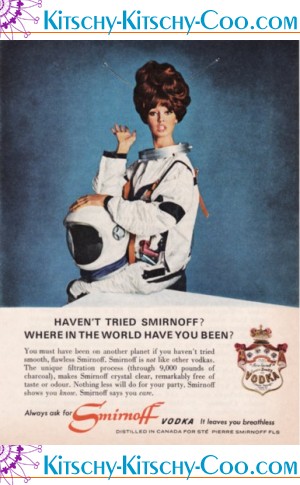
To put this post in its proper context, I think it will help to relay an anecdote from my recent past: A few weeks ago, bogged down by weather & month & school & brain, I moped over to a friend's room, in search of Southern comfort. After a good few minutes of rant & rehash, he & I decided that the best cure for my woes would most certainly be a viewing of our favorite show, RuPaul's Drag Race—a reality competition that combines the hands-on construction of Project Runway with the self-presentation of America's Next Top Model, all seasoned with the delectably acidic sass that only a gaggle of drag queens could muster. In short, it's brilliant, & its third season is now well underway, so we clicked over to Logo Online—where, upon beholding the title of the latest episode, we began laughing, in earnest & profound joy, for a solid five minutes: it was called "Queens in Space."

One more time: Queens in Space.

Really now. There has never been, nor will there ever be, a description that encompasses everything I hold dear more apt than "Queens in Space." It's Bowie to Bolan & back againsilvery 80s sparseness with gaudy beehive dos—a decade-spanning, pulpish amalgamation of all that is good & true. (In fact, it has since entered our canon of personalized & snappy slang terms: a mantra to remind us that, when life gets you down, it's ok: there will always be Queens in Space.)

The point of this introductory digression is, of course, partially to inform you of the beauty that is my new catchphrase, but more so to highlight the rather ridiculous extent to which I love queer-bent pop culture. I know: it's the oldest (& most gratingly annoying) line in the book: a girl claiming to "actually just be a gay man, LOL"—but I can assure you that, from top to toe, when it comes to (majoritarian) taste in pop ephemera, I pretty well fit the bill. I swoon for anything Camp—brashness, glitter, big hair—that gloriously whisper-thin line between self-parody & sheer, unadulterated fabulousness—&, most importantly, divas.

I love a good diva.


—_—_—


Early last year, this love was both electrified—&, honestly, tested—when I attended the sheer explosion of capital-E-Excess that was the latest Kylie Minogue tour. Flanked by a sincere & fanatical squadron of greying V-neck chest hair—&, clung elbow-close, the friend who had convinced me to accompany him in the first place—I did my very best to bop & jive sincerely, fighting to keep my eyeballs from overflowing with Glitter & Feathers & 60-Foot Projections of Muscle-Hunks Showering—my ears from cracking under such a persistent & glorious Disco Beat-Down.


In short, the show was nothing short of Spectacle, catered cannily to its predominant audience—&, while it was certainly a night to remember, it did disorient me somewhat: I began to doubt, in earnest, my penchant for the Truly Fabulous. What kind of a diva-lover could I be, when I couldn't even make it through a night of Kylie without a desperate desire to sit down, cool off, & chug Nirvana until my pores seeped plaid testosterone? I mean, it's true: my railings against Gaga certainly certainly don't fit my contemporaries' typical pop paradigm—nor does my intense & equal (or, often, exceeding) love of Grungy Guitar Boys.

Of course, all hope is far from lost: living, as we do, in a postmodern world of ever-blending lines, there are plenty of outlets for my cross-genre adoration. Semi Precious Weapons, for example, are tops at combining a gender-bending aesthetic with driving garage rock:


Equally on-the-nose are Hunx & His Punx, whose (utterly excellent, previously posted) single calls out this very demographic, referencing Joey Ramone & John Waters in turn:


It was in this vein that I found myself thinking several Saturdays ago, when I was treated to another live Diva sighting: again in the company of an enthusiastic friend, I trucked along to a concert of longstanding Swedish pop icon Robyn, whose three-part album Body Talk has garnered recent worldwide success. The audience was, as predicted, predominantly flamboyant gentlemen—glitter-bedecked & skinny-jeaned, with the occasional be-bloused female compatriot, & her occasional sulky baseball hat boyfriend.

Though I had sincerely braced myself for another Eleganza Overload—dieting down to only one viewing of Guy Pearce's "I Don't Care If the Sun Don't Shine" per day for weeks beforehand, just in case—it was ultimately all for naught. The curtain opened on a sparse stage, just band & mic stand, & even the singer herself was refreshingly unadorned: patterned leggings, hiking boots, & a cropped blonde mop-top—stylish but functional, comfortable, performance-ready. As the concert surged on, my friend & I couldn't but squeal back & forth, "She's just so cute!"—& it's true: with her smaller stature, squeaky accent, & unabashed enthusiasm, she almost can't not come off as adorable. But more than that, Robyn's performance just feels earnest—gimmickless but never artless, uncomplicated without being braindead, only after what it's after: fun, feel-good pop.


In this fan interview, for example, she just seems so lovely & sincere, without any of the intentional stupefying or egoistic pretense that's come to dominate her peers. Just to drop a cherry on my already overflowing praise sundae, she actually opines: "For me, pop music & integrity never contradicted each other," citing acts like Kate Bush & the Talking Heads, then reasserting, ever-sage, "I don't think of what I do as art. I make pop music." (Ah! Yes! Swoon! I'm about ready to kiss her on the mouth.)

I walked away from that concert buzzing with reinvigoration & revelation: Robyn is the diva for us pseudo-glitterati, an act toned down in glitz & budget, perhaps, but never lacking in pizazz. There are no back-up dancers—there is no disco ball: what there is, is a supremely dedicated performer, quite literally running up multiple flights of stairs to reach her faraway audience, singing ceaselessly through a stumble over her platform Timberlands. Her lyrics may not be brain-knottingly eloquent, but they're more than sufficient—even admirable, when you consider that she's writing in her second language & still manages to outmaneuver most American Top 40 Pop. (I'm looking at you, Ms. Perry...)

In short & in sweet, Robyn has clearly made music that, quite simply, she would like to dance to—so dance she does, constantly, with sharp akimbo arms & tectoniqueish fluid jaunts. &, transported, I couldn't help but follow.


Today's Headphone Fodder:


Dancing On My Own—Robyn.


Heart-wrenching, limb-shaking—a perfectly poignant but never sentimentalized (&, indeed, crazy-catchy) personification of Unrequited Love.


This choice was a difficult one, of course, so I'll feature some runner-ups: un-un-danceable "Fembot"; bopping & jiving "Cry When You Get Older"; brain-invading, minor-keyed "Time Machine"; &, most (second) favorite of all, "None of Dem": Platonic disaffected acerbia, with a driving backbeat to boot.

Tuesday, September 14, 2010

A Tiff With Christopher Nolan, Part 2 of 2.

Previously on A Tiff With Christopher Nolan...: Through a specific dissection of The Prestige, I extracted what I see as Nolan's common theme—that is, (middle-aged, male) self-delusion & the dangers of fiction-made-real.

With that in mind, once more unto the breach, dear Reader; I promise, I've done my very best to stay coherent.

Part 2: Along Comes Inception.

On the surface, it would seem that Inception fits squarely into the Nolanesque mold I've described—perhaps even epitomizes it: protagonist Cobb (Leonardo DiCaprio) muddles through illusion imposed upon illusion with his ragtag crew, all the while fighting off his own mental demons. Indeed, the basic tenets of the formula remain intact—a focus on the power of the mind, the leading man's self-deception—but ultimately, it's only enough to convince me that my Christopher did, in fact, have something to do with this wooden mess. From where I'm standing, Inception lacks any of the self-referential depth that characterized each of his previous endeavors—&, in that way, is an utter disappointment, precisely because it had the potential to be his most poignant film yet.

But I'm getting ahead of myself. Let me first say that yes, this film is stunning—truly a technical marvel, the kind for which movies were meant. I'm a sucker for cinema as spectacle, & Inception doesn't disappoint: Paris flips over on itself, Joseph Gordon-Levitt kicks ass in an anti-gravity Bingo roller, on & on until your eyeballs ooze over. Really—it's distinctly visually pleasurable.

Unfortunately, this is perhaps my only positive comment; even such basic points as casting & characterization somehow went hopelessly awry. Was I alone in feeling absolutely no chemistry between DeCaprio & Cotillard? DeCaprio & Page? Page & anybody? Was anyone able to sympathize with any of these characters—to see them as more than two-dimensional sketches dutifully cranking the gears from sight gag to sight gag?

More pressing, though, than these superficial complaints is what I see as an unforgivable thematic oversight: that is, just how little this film about dreams has to do with the actual experience of dreaming. For example: When you dream, do you remember—much less bring with you, sentiently—the items you had in your pocket? Would you wake up if tumbled more than 360˚ in a car crash? Honestly, it even seems to me against the very nature of dreams that someone else should be able to construct them for you. I understand that the thrust of the film is to create seamless Realities within Realities, thereby harking back to some basic Cartesian skepticism (How can we ever really know we're not dreaming??!), but I would argue that the figure of a separate Architect forces the film to castrate its own concept—that what makes dreams interesting at all is how rooted they are in the specific unconscious of the dreamer.

Because dreams are, in a sense, the ultimate self-delusion: in sleep, your mind free-associates, finding proxies for your anxieties, hopes, fears, casting them around in a ghoulish half-light to form a playful rehash of your daily experience. For this reason, dreams tend to be utterly personal, often unrecountable, & rarely sensical in the least. Again, I understand that, for the purposes of the film, it was necessary to render them slightly more causal, more life-like, but I still think that there could have been a more effective middle ground. If, for example, Ariadne was asked to trail the Cillian Murphy character in order to better understand the kinds of structures he's used to seeing; if she had to steal his journal, engage him in a conversation, run him through some MacGuffinish scanning machine, even—anything to show that the dreams she creates are necessarily specific to their dreamer—then I would at least have been partially appeased. As it stands, Inception's "dreams" are ultimately no more than planes (or, honestly, videogame levels)—mere canvases on which action is allowed to play out. & thus, in my opinion, is a huge opportunity wasted—for poignance, for depth & mindfuckery, for traditional Nolanesque genius—because what quotidian illusion is more dream-like than film?

Whereas The Prestige used its magical subject matter both to entertain & to comment on the nature of entertainment—the nature of its own medium—Inception refuses to take this obvious leap, except in tiny, momentary glimmers. Consider the scene in which Cobb first teaches Ariadne about Dream Architecture: We open on a shot of the two at an unremarkable Parisian café, rehearsing various plot points. Halfway through the conversation, though, Cobb stops & asks Ariadne if she remembers how they got to where they are. Page's face scrunches, Juno-like: she can't remember—&, of course, neither can we. We take the language of film so for granted that when this scene cut in from the former, we automatically inferred their travel to this point. & so, too, in dreams—as Cobb goes on to remind her (& us)—does scene mesh against scene, often without direct explanation.

In a moment of generousness, I think I can see my favorite symbolic trend straining towards Inception's surface: with a not insubstantial reach, one might say that films are our Shared Dream, the director our Primary Dreamer & our Architect, all in one. We viewers enter his world, play by his rules, & together have a common peek inside his head. Still, even this shaky inference pales in comparison to the film's latent potential—what I legitimately expected from the moment I first saw the trailer:

Imagine, for instance (as I did, in my jittery anticipation), that, at some point in the film, Cobb realized his whole life as a dream-thief on the run was itself a dream—if, rather than going deeper & deeper into a reality we know is constructed, then returning to the level on which we began, we backed out a few steps from what was presented to us at first. Wouldn't that raise some far more provocative questions about the reliability of our perception—both as human beings & as moviegoers?

Memento's ultimately unreliable narrator implicitly invites us to call our filmic perception into question, thereby heartily bamboozling us several times over, & Inception seems to want to do the same (or perhaps even more), but it never quite gets there—that is, until the absolute last second, when Cobb's top just barely wobbles before the screen goes black. "Was it all a dream?!" we're meant to gasp, but by then, it's too little too late. I understand the appeal of movies that leave you thinking—revel in them, in fact—but I pity the film that does so at the expense of taking this complexity on as real subject matter, & all for the sake of a cheap pun: that Inception is itself an act of inception, with Nolan as the agent, planting the question of Reality in the heads of his viewers.

For my part, I like to imagine that there is a grand & beautiful secret being thrust upon the unwitting masses: Inception is, in fact, Cobb's dream—but not this Cobb: the impossibly cunning thug of the same name from Nolan's debut film, Following. This Real Cobb—who, in his film's final shot, disappears unrecognized into the bustle of a London street—is feeling guilty about his life of crime & betrayal, his devotion to his boss, the loves & friendships he's damned in order to maintain his mercenary autonomy. So, one night, he sleeps uneasy: he dreams that he's an American on the run who must destroy a patriarchal company, that his past crimes will somehow out unwittingly to those around him—that he can never escape his life of grifting & self-imposed illusion. Following-Cobb concerns himself so intimately with the fact that everyone keeps a physical box of personal mementoes; it's not the world's biggest stretch to see this "box" replicated psychically in Inception-Cobb's Elevator of Regret.

Sure, it's highly implausible, but who knows. It's just a thought, after all: that fantastical parasite, gnawing at my brainstem—the dream I've constructed for myself to counteract this otherwise crushing letdown.


Today's Headphone Fodder:

Gravity—Nico Vega.

I first heard of Nico Vega the night I saw them, accidentally—opening for Semi Precious Weapons at that show I so raved about—& it was, without question, Love Instantaneous. They are simply brilliant: heavy rock aesthetic with powerhouse female vocals, lyrics just to the left of obscure. This song in particular is dangerously close to Perfect: quick, raw, no punches pulled. Speaking of which: the video is also pretty excellent.

Wednesday, September 1, 2010

Raw Power.

After a night of ringing ears & too-stomped feet—a night on which I can proudly say that I danced onstage with (& touched, twice) (!!!!!!) one of my most idolized of idols—I feel I must take this time to salute the Godfather of Punk, the World's Forgotten Boy: Iggy Fucking Pop.


[ My sole attempt at a picture onstage. For obvious reasons, I gave up quickly & danced my ass off to "Shake Appeal." ]

This entry came quick—poured out with endorphins & sweat—because unlike Bowie, who is enigmatic, cerebral, fading in & out in shades, Iggy is simple; raw; the absolute strongest, most feral distillation of Rock & Mother Fucking Roll. At 63—sixty-three—this utter fireball of a man, with skin burnt & sagging over straining muscles, veins spidering out in raised squiggles on his left shoulder—this dilapidated, drug-collapsed shell of a body stage-dived, thrice, flailed & screamed like he was boiled alive by every guitar wail, every thrum of the bass, slap of the snare. There's a passage of his from Please Kill Me (required reading, for every human) that I think about constantly, every time a song gives me goosebumps:
I wanted the music to come out of the speakers and just grab you by the throat and just knock your head against the wall and just basically kill you. That’s want I wanted. And it never did that enough for me. No matter what I did, I couldn’t get it. I couldn’t get the treble to hurt enough, I couldn’t get the bass to hit you enough, I couldn’t get the beat hard enough, and so on, and so on, and so on. So I kept doing mix after mix after mix until I was crazier and crazier. But it still was not hard enough, you know?
& this is what I will always love most about Iggy: that he recognizes—&, in fact, strives for—that moment when music transcends its sound waves & crawls through your pores, tingles toxic in your blood until, flesh heavy, you have to fucking thrash it away: writhe like the exorcised, like leeches, cutting out your heart for the Gods. Music is never so good as when it hurts—but even then, there's music & then there's music & then there's Iggy Pop, operating on another plane: that level just past tangible, reaching down your throat & taunting the beast that lurks behind your bones. Raw power—& honey, I can feel it.

Photobucket

Hallelujah.

Today's Headphone Fodder:

Gimme Danger (Live at the Whiskey-a-Go-Go, 9/16/73)—Iggy Pop.

Sometime, somewhere, someone told me that poetry can be defined as the least number of the most beautiful words. If so, then Iggy Pop is possibly the most talented poet I know, spilling forth lyric after lyric, most made up on the spot: utterly bare-bones phrases that are somehow more right than anything else.


Give me danger, little stranger, & I'll feel your disease.

& on & on. Some of the brevity is intentional: when Iggy was starting out, he would write songs like letters to Soupy Sales—that is, in 25 words or less. (No fun, my babe, no fun—a whole verse & only four!)

Still, where it really gets me is in the improvisations, the deviations into raw, unscripted soul that you're likely to find on any live recording of his. Like in this version of "Gimme Danger," with its desperate, ad-libbed bridge: "& I, I wanna be touched, & I’m a'gonna be loved," devolving quickly to the base "& I want, & I need." Just a subject & a verb, & still they slice—just too honest; simple & perfect: poetry.

Tuesday, June 29, 2010

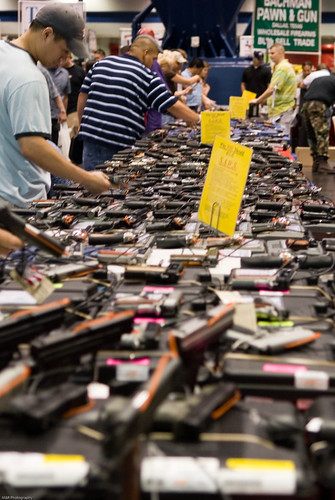
To Keep & Bear Arms.


So... Wait. Let me get this straight.

The Second Amendment of our United States Constitution reads as follows:


Now, let's backtrack about 23 words, back to those first four.

A well regulated Militia.

& we'll add the next bit, too, as that comma is clearly olde-timey; the only way the sentence makes grammatical sense is if the whole clause reads thus:

A well regulated Militia being necessary to the security of a free State...

Meaning: "Assuming that a well-regulated Militia is necessary to the security of a free State." Meaning, not only is the right to bear arms predicated on a well-regulated Militia (not three guys in a Dodge Durango)—or even a "Militia" being a system of organization that people are apt to utilize—but the intent of this Militia was that State could protect against State—as in, if Massachusetts decided to take over Connecticut (a choice, by the way, that I would have no problem with), Connecticut should be able to have guns to defend itself.

All right. That said, explain this to me:

An explosion of cases will keep courts busy for years defining gun control's new limits now that the high court has ruled that wherever they live, Americans have a right to possess guns, at least for self-defense in the home. (AP)
Really. Someone. Please. I am at a loss. This just quite literally does not make sense to me. Nowhere—nowhere—in the 27 words of that amendment does it indicate that arms are appropriate for home use. In fact, it indicates quite the opposite: a well regulated Militia—State defense, not self-defense. I feel like the court just redeclared drinking illegal, ruled that the way we count people includes fractions again: it's as if they ignored the first line of the amendment entirely.

Because, being a Fruity Liberal Wuss (or, as I like to put it, Someone Who Prefers That More People Stay Alive Than Not), I read this amendment as self-abolishing; once a well regulated Militia is no longer necessary to keep individual states free, then the government can infringe to its heart's content. Otherwise, why on earth would the framers of the Constitution have phrased it that way, with a conditional/descriptive clause at the start?

Because my point isn't provable beyond a reasonable doubt, I do accept the opinions of those who say the Framers intended every (able-bodied, male) citizen to have ready access to a gun. However, I would still contend that these "arms" were probably kept in a local storehouse somewhere, for use by the Militia—or, even if they weren't, even if everyone walked around brandishing muskets like so much Kleenex, that America in 1776 was a fundamentally, unforeseeably different place from the America we know & love. What I mean is: this law seems, on several levels, so insanely outdated as to boggle the mind.

Ultimately, I feel about the Constitution the same way I feel about the Bible: you implement the core tenets of each—be they Love Thy Neighbor or Checks & Balances—updating or forgetting entirely the rules that attempt to regulate specific behaviors—such as Sodomy or Gun Ownership—based on the understanding, which I don't think is a particularly hard sell, that progress happens. Destinies get Manifested, & it may be necessary for the Law of the Land to adapt. Put it this way: Thomas Jefferson could never in his wildest dreams conceive of anything like the AK-47, let alone buying one on the internet.

Unlike other socially incorrect laws (read: those involving slavery), this one has remained unchanged, never successfully challenged, because it's essentially impossible to make a clear case for its outdated status (that doesn't employ hyperbolic examples of former presidents & assault rifles) while "arms" are still around. Guns exist; the law talks about guns; ergo, the law ought to exist. But, really, let's take a look at what we've done:

Alito essentially repeated the formulation used by Justice Antonin Scalia two years ago that the court was not calling into question "long-standing prohibitions on the possession of firearms by felons or the mentally ill, or laws forbidding the carrying of firearms in sensitive places such as schools and government buildings."
This is seen as worthy self-congratulation: that we don't bring guns into schools or sell them to the mentally ill. That's considered restraint. That's appropriate regulation. I mean, I just— ...—

These are weapons.

They take lives.

They negate others' existence—void all on which we predicate anything, ever.

I don't care if the person in your sights is Bad or Intimidating or Trying to Steal Your Flatscreen TV: they deserve to be imprisoned, not shot. Even if you disagree with that as a general statement, I would hope you still see the importance of letting the state & its judicial system—or, at the very least, trained police officers—be the ones to make the fatal call.

Am I wrong? I mean, I understand that the game changes once there's a Violent Intruder in your very own home, but I also just don't see the practicality of personal gun ownership in this scenario. For example, assuming you’ve gotten the gun to Protect Your Family, the precautions necessary to truly ensure your child doesn’t blow his or her head off all but nullify any chance of its ready availability in an emergency. Of course, the only response to this foreseeable snag is to be less & less safe—to leave off those child locks, to carry a concealed weapon in public—which will only cause far more hassle, more violence, more death than this could ever be worth. Because honestly, I think what gun owner hopefuls are after is not actual Protection, but the illusion of protection, of security—&, honestly, the illusion of their own Heroism.

I find it frustratingly coincidental (curse you, O Great Screenwriter) that I just spent the other night thinking/writing about Vigilantism: it strikes me that those who would take advantage of this country’s ever-dwindling gun regulation probably think something along the lines of, “Well, I’ll get this gun, just in case; I won’t intend to use it much, but the second someone threatens me or my loved ones, I will spring into action!!! Ka-pow! Ker-chop! Shazaaam!!!!!!” Everyone wants to be the Hero, rightly lauded above all, responsible for having protected Life—paradoxically, of course, in this case, by dealing Death.

& consider this: were I awoken in the middle of the night by suspicious noises, I would absolutely take my (legally purchased) handgun out of my night stand, creep downstairs, & in my panic, probably end up shooting some local teenagers kicking a beer can around my front yard. My point is: 1) people who don’t function well under pressure shouldn’t have the power to kill on sight, 2) that the government can’t (either actually or practically) test for things like competence under pressure, & that therefore, 3) sanctioning guns in every American home—for this & reason upon reason—is effectively sanctioning hundreds of thousands of Accidents Waiting to Happen, & fatal ones at that.

If you feel you need more convincing—that you have a personal tale of gun success to trump my ham-handed examples, that you just like guns & don’t see the big deal—take a gander at the list of gun regulations that could be overturned under the new ruling. One that especially worries me is the misdemeanor domestic violence caveat: that most convicted of domestic violence are technically not serious enough felons to prevent them from now buying a gun, which means that children & spouses of abusive partners have a whole other level of Fear coming their way.

But really, though: let’s please return to the heart of this matter—what stops me from even really engaging in this debate, leaves my brain somewhere behind, bashing again & again against this impossibility like a wind-up toy into a wall: this decision is just not supported by the Constitution of the United States of America at it is written.

I don’t understand—I really just can’t, on many levels—but I can feel that something is rotten in our state, & it’s becoming increasingly clear that Heaven won’t direct it: what we need is a goddamn Well Regulated Militia.


Today's Headphone Fodder:


Rock 'n' Roll Never Looked So Beautiful—Semi Precious Weapons
(Live, Bowery Ballroom, 4/26/10).


To: spw@semipreciousweapons.com 4/27/10, 12:11 AM

Subject: Beautifully fucking done.

Let me start out by saying I have never written a fan letter. (I think they're sometimes silly.) However, let me also say, I have never seen a show as brain-bending, gut-wrenching, simply-fucking-transcendent from beginning to end as tonight at the Bowery Ballroom.

You encompass everything I love about music (megawatts of Raw Power coupled with glitter-glamourous stage aesthetic), & though I haven't been there from the very beginning, I've been with you a good long while, & it's so, so, so excellent to see you positively zooming upwards. Today our love, tomorrow the world—& so it goes.

You are glorious, & you are the future. You are shiny, make-up-spattered titans of rock-&-mother-fucking-roll. I salute you with all the love in my heart.

xxx,
Anneliese

You Love You: The Album. Now available on iTunes.
Do it. You will not be sorry.

Sunday, June 20, 2010

Make Homosexuals Marry. (Especially If One of Them Is Mike White.)

It actually makes me really happy that the (Pre-Kiss vs. Hug) Cameron & Mitchell Strategy I described earlier—more snappily dubbed "Make Homosexuals Marry" by those leading the charge—is being put to widespread use. Because long-term, life-melding commitment—especially marriage, regardless of gender—is known to have a negative effect on any couple's rampant fun & passion; it's actually counterproductive for those who fear The Big Bad Gay Lifestyle to oppose such unions between same sex couples. I mean, sure, it's a weird, roundabout way to make a point, but it definitely works for me—especially in this video. (Especially because I love Mike White.)

Today's Headphone Fodder:

Earlier tonight, I trekked up to the world's nosebleediest seats at Boston's House of Blues (seriously: back row, third floor of a very vertical venue) in order to see Evelyn Evelyn, the conjoined twin sister singer-songwriters who caused some internet brouhaha (sp?) with their potentially ableist backstory. After the main act (& a brief intermission), Jason Webley did a two-song "set," followed by Amanda Palmer, who performed some lengthy monologues on the State of Her Awesome Life / Being an Artist / Being Back in Boston, with the occasional musical interlude.

Though I was so not into the way Amanda handled a lot of the backlash against the Evelyns (regardless of the fact that some of the nay-saying could seem overreactive to those not feeling it for themselves), I actually did end up enjoying the twins' performance. The standout of the night was, of course, the song I'd seen live over two years ago, before this concept was actually a Thing, with conjoined dress et. al.: the song called You Only Want Me 'Cause You Want My Sister, which is infectious & clever & includes a Heathers reference. Also, they do a super-acoustic (that damn ukulele...) cover of Love Will Tear Us Apart—which, though one is like to cringe when looking through an ableist lens, is actually really great.

Still, I walked away from the night unsatisfied—more than just oxygen-deprived from the altitude: I wanted (want, will want; every tense) more Webley. That man is such a force of nature, brilliant songwriter, wildly talented performer—&, for the record, he was such a friggin' gentleman about the whole "Ableism Ableism" kerfuffle. I admire & adore him & his music to the utmost of utmosts, &, though I desperately wished for more, I was so very happy that he performed two of my favorites: There's Not a Step We Can Take That Does Not Bring Us Closer, with its customary violins vs. trombones audience standoff, & Last Song, which he dedicated to his recently deceased grandmother. (RIP, forever & on.)

There were, in fact, two more Webley songs performed later in the night: one, the fun-but-simple Drinking Song as a group encore; the other, a duet with Amanda of perhaps my very favorite (tied with those already mentioned—& Ways to Love. & Dance While the Sky Crashes Down. & Map. Eleven Saints. Days With You. This is a hopeless game.):


Yes, this is our big-text, official Song of the Day—mostly because I love it, a lot, but it's also catapulted above the rest because I'm a little peeved at how Amanda has so co-opted it. It's not that she ruins the song, per se; I suppose it does suit her theatricality & piano stylings. I just... It's Jason's song! & it's not like he's such a famous, established band as Radiohead; I really wish they could let the song get by on its own (read: his) merits. Now, it's nigh impossible to find a version of it that isn't somehow Palmerized.

Thursday, May 27, 2010

What We Watched For: The Big Angry Lost Post, Part 2 of 2.

[ NOTE: This post contains spoilers—both in the sense that it reveals certain details of the Lost finale, & that it will probably leave you with a negatively-tinged outlook on the show, life, & the pursuit of television-fueled happiness. ]

Previously on What We Watched For:

("... the Dharma Initiative, which I assume is a club for facist yoga enthusiasts...")

Or, more accurately:


Also, this:

("If I f— him, he's not ever going to be the same again.")

All right, enough stalling: This post has been hard to write, because I just feel so thoroughly drained from the whole phenomenon—the 4.5 hour event that was this past Sunday, plus the 4-ish hours my friend & I spent afterwards in my living room, mourning & ranting & generally parsing so intently that I felt like I talked it all out of my system—such that to revisit it would be too much, would stir up the sting of true disappointment we tried to discuss away.

But I promised—to my (one hand's worth of) Readers & to myself—& it's gotten to the point where I have other potential entries pre-written & backed up, so here it is—if disingenuously, because all I really feel is numb & more than a little duped.

Another friend & Lost viewer—the one, in fact, who enabled my first viewing of the show—sent me this video:


... which is basically the fan-but-not-fanatic's version of The Official (Lostpedia) List of Unanswered Questions. Out of this brilliantly orchestrated soup, all of which I think are spot-on, jump a few that really bugged me. Also, I've provided my own answers, because according to Darlton, I ought to be able to enjoy guessing for myself. Because that's fun & productive. (...)

Why can't women on the island have babies, & what does this have to do with anything?: I mean, come on! This was such a big deal in the first few seasons! It's the whole reason Juliet even existed as a character! (Except, you know, to be a muted-voiced killjoy—& to give Sawyer someone to bone while Kate was in a different year.) This really ought to have been addressed somehow in the explanation of Island mystique. Instead, the "answers" featured a Superbirth, in the unexpected arrival of magical twins (Jacob & the Man in Black). Weak, Lindelof.
Anneliese's Explanation: Ben Linus personally attempts to ritually impregnate the women of the island & is unwilling to accept that he is infertile / has demon sperm.

The General Bundle of Walt Questions, AKA What was his deal?!: Really, they made such a point of highlighting Walt's magical magicalness in the beginning—but then, suddenly, he pubesced & was worthless to them. Which I just don't get: children in the real world grow up, too! (She says, thinking of her ever-testosterone-fueled 13 year old brother.) Was there something important about his being the tween messiah? & could they not foresee that the show was going to run longer than they could keep a child actor in suspended animation?
Anneliese's Explanation: It was, in fact, Walt's Cuteness & Smallness that were going to save the Island. In the head of the statue of Taweret, there is a cockpit just big enough for someone Walt's (original) size—because we all know that the statue was built by the Munchkins when they came with Henry Gale in his balloon—& when the statue is controlled through that cockpit, it becomes a Weapon of Robotic Destruction, with the sole purpose of taking down the Smoke Monster. But, as soon as Walt grew up, they couldn't use this sweet ending, so they just booted him off the show.

Wasn't Sayid's soulmate Nadia?: The answer is, yes. His love for her was, in fact, his only character motivation ever. When Desmond brings Sayid back from the dark side with his speech about love, he is talking about Nadia; when Sayid has to perform terrible deeds in the name of love (in Flash-Sideways or otherwise), he performs them for Nadia. His three-episode fling with Shannon was just that—an island romance, the ultimate "because you're here" hook-up—until Shannon got killed off for being one-dimensional, & everyone happily forgot about the mistake of a character she had been, including Sayid.
Anneliese's Explanation: The actress who plays Shannon had one episode left in her contract; they promised her, when they killed her, that she could come back for the finale.

Why don't the rules of time travel apply to Desmond?: By which I take our avid questioner to mean, why doesn't Desmond also flash through time in Season 5? Though the answer to that specific question probably has something to do with his anti-electromagnetic superpowers, I choose to extrapolate from that another question: what the hell happened to everyone else on the plane? There were thirty-some survivors, right? All of those extras bumbling around on the beach in Seasons 1 & 2? Did they jump in time, too, like Rose & Bernard? If so, where the fuck are they?
Anneliese's Explanation: Every time Desmond says "brother," the Smoke Monster kills a kitten; their vengeful ghosts keep him stabilized in time. As for the other people, I like to imagine that, from the start, they had their own leader, their own token girl, their own funny fat guy—except instead of an ass-backwards, non-mystery drama free-fall, they're happily filming a sitcom on another part of the beach.

If the Smoke Monster can't leave the island, & was zombie-Jack's Dad, how does Jack's Dad appear at a hospital in L.A.—& on a freighter? How did the Monster get into Jacob's cabin?: No one has any fucking idea. I mean, really. Especially the freighter—because maybe Dead Horace telling Locke to go to the cabin was actually the Smoke Monster impersonating Dead Horace, & maybe it was the Smoke Monster's cabin all along... But then what was that shaking chair all about? & still, this doesn't explain how Christian was able to appear to Michael on the freighter—whether he was a version of the Smoke Monster (who can't travel across water) or a ghost (who only exist on the Island itself). [Note: I just read that last sentence & am now seriously contemplating Seppuku. Talking about this show makes you sound crazy.]
Anneliese's Explantion: Christian Shephard is the Lord God Almighty (or, you know, the Christian Shepherd), & his only son, Jack, must sacrifice himself for the sins of mankind. [Links to THE Spoiler.] This theory is subtitled as, Lost Sells Out to the Christian Right—or, in a previous draft, Lost Writers Are So Up Their Own Asses That They Don't Understand the Implications of Having Someone Named Christian Shephard On Their Show, Let Alone Making Him the All-Knowing Messiah Whose Son Dies For the Good of Man, & Who Leads People Into Heaven—Which Is Located In a Church, No Matter How They Try to Dress It Up Like a Buddhist Synagogue.

If both of Daniel Faraday's parents are British, & he went to Oxford, why doesn't he have a British accent?: No, really.
Anneliese's Explanation: I got nothing. This was just extremely poor planning on their part—or, rather, empirical proof of a lack of planning.

Why does only one specific bearing get you off the Island? Why do those returning to the Island need to recreate the circumstances of their first arrival? Why can they move the Island? Why did they move the Island? What the fuck is this island?! & what, for God's sake, are "the Rules"?: The first rule of the Island is, you don't talk about the Island. The second rule of the Island is, you don't talk about the Island. Especially in the finale.
Anneliese's Explanation: Look, I can theorize 'til I'm blue in the face about Taweret being a battlebot, postulate about a rain of lollipops that falls on the Island every Sunday at 4—but is only visible to those who believe—& still, it won't do me any good. I can never pretend to know what I'm talking about, nor can I even come close. Because this show is an insular, short-lived piece of badly constructed fiction. Am I the only one who finds it wildly presumptuous that they chose to explain the mysteries of the afterlife, but not their own goddamn magical Island? In the discussion of What Is Yet to Come For Us All, there are thousands of years of musings & tradition we can use to speculate, & perhaps Lost could be commended for raising/adding to the debate—but not when it comes at the expense of delving into their own "mythology."

& this is what I find most insulting: the perpetuation of the show's greatest myth, that somewhere behind his superhip glasses & supersmug leer, Damon Lindelof has this whole working idea of what the Island is—but, because he presumes we wouldn't want the mystery spoiled, he has only shown us a slice. Of course, this is 1) not true 2) stupid 3) so clearly false as to boggle the mind—

"But wait," my friend sagely stopped me, just before the smoke (Monster Inside All of Us—it was one of those dumb Verizon things) began to waft from out my ears. "Wait. Pause. What did we like about the show?"

His question took me totally by surprise; there was so much to hate about this bullshit excuse for a finale, how could he even ask—? But then I remembered: hate & love are just two sides of the same coin (or Othello piece, to keep with the spirit of the show). If I really cared nothing for Lost, why spend so much time talking about it—or writing about it now, for that matter? Something about this show intrigues me—or at least it did, once upon a time, & that's worth acknowledging.

So, in an unprecedented turn, here is What I Ultimately Liked About Lost:

1) The so-seeming Gods of the Island are subject to human error. As Jacob says first & foremost when trying to explain, "I brought all of you here because I made a mistake." I've always preferred depictions of the human quality in the divine, à la the Greek pantheon. So, well done there.

2) In that vein—though I'm pretty sure that this is just me, & the Island was definitely supposed to be important & special—I'd like to think that its magical magicalness was in question, perhaps because they didn't explain it. Though we're told a few times over that the world will end OMG if the Beautiful Light That's Inside Every Man goes out, when it does, the only thing we see happening is the Island itself falling apart. It is, in that (& every) sense, a self-perpetuating phenomenon. Unclogging the Sink Drain of Hell could ultimately be inconsequential to the rest of the universe; Jack could very well have died for nothing. Still, in the final moments of the show, he looks up at the plane taking off—a plane full of his newfound friends who are now flying to safety—& he smiles: he has made his own "meaning" by making meaningful human connections. This moment was, to me, far more effective than that overblown Purgatory-Meets-Virtual-Reality subplot.

3) They explained where Vincent went—& he lived.


So, fine. I'll stop complaining. I won't go over how wildly idiotic & trite those Love Connection moments were; how I was basically right about the kung fu movie showdown between Good & Evil; how the moral of the story was ultimately that being in a successful heterosexual couple is the key to Heaven—or, at the very least, that being in a plane crash is a reasonable cure for loneliness. It's just not worth it anymore.

Because I think we can all accept that the finale was really fucking lame & disappointing without having to dwell on it much longer. So, let's acknowledge the good & the bad—in defiance of that black-white divide—& realize that though the show's end was stupid & preachy & poorly constructed, we can still take its main teaching on into later life:

Never Get This Into a Single TV Show Ever Again.

So, now, on the count of 108 (=4+8+15+16+23+42), let's all shut our eyes to this six-year "Made you look!"—& really, truly let go.


Today's Headphone Fodder:


I saw HUMANWINE at the Middle East this past weekend: transcendent, to put it mildly. They played all of the songs I hoped for, rendered songs favorite I had forgotten about, rocked everyone to their core for over an hour—the Platonic ideal of a concert, really. What wonderful, wonderful performers—especially Holly, of course, whose voice sends shivers through my skin, plucking up goosebumps & quaking at the spine. She is, by far & away, one of the greatest female vocalists out there, just as her band is one of the best to see live. This song, in particular, was one of the ones I never really separated from the pack before, but now I can't seem to stop humming it—or watching this live version on YouTube. One set of lines I find particularly beautiful:
& I tore up my arms, made them like wings /
They could have been anything.