Monday, July 26, 2010

Inspirational Quote of the Day.

Or the week. Month. Lifetime.

This wonderful vital force that was articulated by the music was really about corrupting every form—it was about advocating kids not to wait to be told what to do, but make life up for themselves, it was about trying to get people to use their imaginations again, it was about not being perfect, it was about saying it was okay to be amateurish and funny, that real creativity came out of making a mess, it was about working with what you got in front of you and turning everything embarrassing, awful, and stupid in your life to your advantage.
—Legs McNeil, when asked to define "Punk."

I gloss over this once every few weeks—hours in a rough or guitar-laden patch. It reminds me to stay vital, to stop being ashamed—because if the Ramones did it, then so can you. Let's dress up & be stars tomorrow: so said the ad Joey answered, & so says the ink on my forearm.

Long live Punk Rock.

Amen.


Today's Headphone Fodder:


Though perhaps not the best known figure of the '70s New York punk scene—in a time when Delia's sells Ramones shirts alongside fluffy pink skulls & stripe-y tights—Richard Hell left, dare I say, one hell of a mark. For a preliminary taste, I recommend the album Spurts: The Richard Hell Story—or, if you'd rather, a read-through of Please Kill Me: An Uncensored Oral History of Punk, where you'll find tidbits like this:

One night I was lying in bed thinking about her, how gorgeous and irresistible she was, and I remember thinking, I wish she was there when I got hit by a car. Then I could say to her, ‘Mimi, I’m dying, would you hold my hand?'

Sunday, July 25, 2010

A Question.

A blip of a momentary interim post. I apologize again for my endless hiatus, but really: you try chasing after children 8 hours a day—sometimes even for an Overnight (I shudder at the memory)—& see how eager you are to pluck the keyboard strains.

There is, however, something that has been plaguing me. It's been gnawing at the edges of my consciousness since I first heard the offending song played over earbuds in the subway, then on every subsequent listen-through (though, for obvious reasons, there haven't been many)—& really, whenever my brain has the time (& volition) to take a break & turn to pop. It has befuddled & confused, perplexed & dare I say bamboozled—& now, it's time to exorcise my demons:

Why, for the love of all that is holy, does the Britney Spears song "3" list Peter, Paul, & Mary as its three threesomely names?


I mean, of course, after listening to the song at all—or viewing this lifeless excuse for a video—most of the words in that question seem to fall away, leaving one big looming "WHY?" Really now: there are about 157 problems with this song—the amateurish deep voice echoing in the background, the trashy-lewd premise, the insertion of a moan in place of "sex"—but most egregious & most careless is the lyric issue: the issue being, they are painfully stupid. As if Faith Hill hacked up a hairball, or Ryan Seacrest blurted them out during his conversion therapy. So. Fucking. Dumb. As to boggle the mind. I mean, really now, let's take one of the more ridiculous lines to task:

Living in sin is the new thing.

Is it, Britney? Really? Because there are several hundred thousand corpses left over from the Spanish Inquisition who may beg to differ. Perhaps if we hop forward a few hundred years, we could talk to some Antinomians. Maybe even zoom ahead to the underground clubs of the '80s & '90s—results of the sexual revolution that flowed right alongside your three favorite folksingers. My point is not that a pop song need be a history lesson, but that every source in which words are spoken should stray from asinine generalizations, no matter how alliterative. (Also, how sick is it that in the edited version—the one showcased in the video above—this already frustrating line was altered to "living like this"; that someone in marketing thought a mere mention of "sin" would tank the song's sales. Someone, please—I dare you to deny we're slipping into a theocracy.)

But back to my main point—that is, the naming of '60s folk trios—because this one is an easy fix. Three names. That's all you need: in a threesome, there are three people, & therefore three names. Any three names would, in fact, have been better than Peter, Paul, & Mary: they sang "Leaving on a Jetplane," for fuck's sake! "Blowin' in the Wind"! "Puff the Magic Dragon"! They are perhaps the least inherently sordid human beings possible—& not even really in an interesting or ironic way.


What I mean is, if she (oh, who are we kidding: her various publicists & lyricists) were interested in sullying the sacred—perhaps to live better in sin, as I hear it's the new thing—why not pick three biblical characters who didn't sing folk songs, who actually interacted in a way that could be spun lewdly? (The Three Kings, anybody?) & honestly, if you're going down that road, you have THE FREAKIN' HOLY TRINITY staring you right in the face.

There is, of course, the distinct possibility that the people who barfed out this song at coke o'clock on a Tuesday just couldn't think of another trio ending in "-ee" to fit the syllable count. I have taken the past minute & a half to come up with some examples:


"Athos, Porthos, Aramis" (If pronounced Frenchly.)


"Heaven, Hell, Purgat'ry"

or, the perfectly innocent: "Jack, Jill, & Britney."

Any of those—or, really, anything at all—would have been better than what stays, etched into the fiber of so much cheap plastic. Because really, Peter, Paul, & Mary are just awkwardly tepid—not sexless, but not sexy—& therefore an exquisitely poor choice.

That is all.


Today's Headphone Fodder:


You Don't Like Rock 'n' Roll—Hunx & His Punx.

I am obsessed with this song—& its video. Not only does it combine every pop culture facet I adore—cheeky, punky (in the original sense), straight out of a John Waters movie—but it's also catchy as all calamity, while being simple & basically perfect & speaking the motherfucking truth: You don't like rock 'n' roll, & I don't like you, indeed.

Monday, July 12, 2010

The Bats Have Left the Belltower; the Victims Have Been Bled.

[ Full disclosure: work has kicked up again—another summer spent combatting attention deficits with Photoshop & camp songs from 8-4 daily—which means that I have significantly less time to spend perusing the web for news, pop or otherwise, to expound upon. As a result, my beloved Blogling has gone neglected as of late, & may very well again in the coming weeks. For now, though, let me at least keep the embers alive with a quickly compiled pondering.

&, before we begin, in the theme of full disclosure, I will just say this: I do not like vampires very much. In fact, I was actively terrified of them as a child, sleeping with my blanket tucked up around my neck until I was far too old. Every one of my recurring nightmares somehow involved vampires, who usually appeared on escalators for whatever reason, chasing me as I struggled in vain to run—stuck in time-molasses, as you so often are in dreams. Even today, I have a hard time appreciating Ye Olde Vampire Films (Bela Lugosi & all), uninterested by their bodice-ripping, their simplistic plot. I mean, what good is a villain you already know how to beat? Sunlight, stake through the heart, cross, holy water, garlic, & on & on—Eddie Izzard does a particularly hilarious routine on the subject. The one potential exception is The Hunger, but it includes Bowie—& besides, how could anyone cast off so brilliant an opening sequence? Of course, all of this is subjective, personal, Freudian, what have you; I apologize for my inherent bias, but that said, let's continue with our more relatable Big & Important Cultural Pronouncements. ]


While computering about in the open dining room/kitchen of our new apartment, I was accidentally treated to the last 10 or so minutes of True Blood, HBO's stab at this ubiquitous vampire craze—a show that my stepsister deems "brain candy," but nevertheless watches religiously. (I can relate: L Word, anyone?) Bearing in mind that I've only witnessed these scant few moments; that I've been watching (& writing about—coming soon to a Blog post near you...) The West Wing, which is like a macrobiotic diet for the synapses; &, moreover, that I'm particularly disinclined to enjoy this whole vampire thing in the first place, my preliminary take on the show goes something like this: Um, what the fuck—?

To put this into perspective, here is what I saw:

1) Anna Paquin with a jet black bob—which should just not happen.

2) This guy sprouting fangs, biting into his own arm, then slowly moving it over multiple trays of shot glasses, letting the blood pump freely from his open wound into serving-size portions.

3) A ritualistic maiming, in which a near-naked woman—cloaked only in a large fur coat—gets voluntarily burn-branded, howling in pain while about 100 Central Casting Redneck Men cheer. (These men went on, of course, to morph into wolves—because what is derivative vampire fiction without derivative werewolves? Though I'm told in the modern idiom, they're actually more like Limited Shape-Shifters; their transformations are voluntary, not lunar. & so is the mythology castrated once more...)

This latter parenthetical grumbling—which was unfortunately not so parenthetical when I confronted my stepsister & her friend about how entirely bizarre I found what I had just seen—sparked a train of thought that's been unravelling in my head for some time now, ever since Twilight fandom reached its impossible fervor:

Why vampires?

As exhibited by my previous dissection of werewolves, I'm of a mind that most cultural phenomena—or, at the very least, mass-fanatic devotion to a particular mythical creature—stems from something inherent in its backstory, some basic kernel that folk of a certain place & time find alluring or cathartic or helpful. So, with mind open in full, I ask: what is it about vampires that sells so well?

First, I think it is important to outline the key features of the vampire: He is undead—like a zombie who retains mental status—& in order to stay even half-alive, he must drink the blood of the living by biting them in the neck with his pronounced fangs. Those on whom he preys—traditionally, helpless, swooning women—are thereafter doomed to a similar fate. Moreover, he can't go out in the sun, nor can he touch holy things, & is bummed out by garlic (why, no one is quite sure); in days of yore, he had a proclivity for big black capes, hailed from Transylvania, & was bested only by a stake through the heart.

Though these current popular iterations of the myth are sufficiently modernized—including sparkly daytime excursions & use of the Unholy to advance a Christian agenda—the basic tenets of our Count Dracula still remain, spattered across every media outlet: the bloodlust, the swooning, the fangs. In my mind, there are three main reasons as to why; they are as follows:

1) Zexy, Zexy Bad Boys.

This is the answer my stepsister gave when prodded: that vampires are the ultimate Bad Boys. & I agree: unlike the (original—none of this animagus whatnot) werewolf, the vampire is always fully conscious of his actions. He doesn't black out or transform somehow in order to conduct his specific brand of violence: he just can't help himself. Bad Boys have been around since the beginning of time, & unfailingly, no matter what form they take, they are always the hottest—rebels alluring with or without their cause. It's Jess over Dean, J.D. & his murderous agenda: people who knowingly flout the law are desirable, intriguing, strong—sexy.

In the case of vampires, though, there are two sides to this most attractive of coins: On the one hand, the vampire can be a powerful symbol of Lust—dangerous, wrong, but fundamentally uncontrollable. In this way, he's almost like a porn protagonist; regardless of flimsy, extraneous plot, he will succumb; it's inevitable; it's in his ravenous nature. Even the act of biting an exposed jugular is unfathomably intimate; when one shucks away age, death, & garlic, the vampire can be read as a profoundly sexual figure.

However, for those still told by their family/religious community that sexual impulses are shameful & dirty, the vampire becomes the ultimate masochistic guilt-rehash: the sympathetic undead protagonist does everything in his power to keep from biting the woman he loves, but in the end, he just can't help it. He perpetrates violence, ruins lives, all because he failed to control his urges. There's often something very sexy to be gleaned from the Wrong, but it is, of course, always easier to read it as is; without nuance, without willingness to partake in the dark, vampires remain the villains—lurking just around the corner, waiting to prey on our latent desires.

& this is why I think Twilight works so magnificently in the razor-thin venn diagram between Unholy Smut & Mormon Morality Tale: because while the very act of vampirism is sexy, it also lends itself brilliantly to cautioning against Unbridled Passion. (Or even sex before marriage: keep in mind, once you're bitten, you can never go back.)


2) Lady Masochism.

More potent, even, than the sexual shaming that these vampire tales can inspire is the bizarre brand of male-to-female nonconsensual S&M that seems to be at the core of the concept. While there are, of course, plenty of lady bloodsuckers stalking the fictional streets, the basis of the myth is in Sir Vlad the Impaler, & the predominantly male cast of True Blood, as well as the predominantly male Edward Cullen—& his predominantly male-attracted fan base—allow me to feel comfortable claiming that the Platonic incident of vampirism is between a male aggressor & a female who may or may not be wearing a flowing white nightgown.


Yes, indeed: the bodice has ripped, the fear-crazed maiden has fainted into the arms of the beast, he plunges his fangs into her lily-white neck—& somehow, she ends up satisfied, vampirized herself. She is quite literally converted into finding this previously undesired act pleasurable, left wanting to do it again & again. I don't mean to sound alarmist, but the traditional vampire myth reads not unlike those creepy, rape-y manga stories (or Ayn Rand novels), in which a woman is bound & forced to have sex, only to find that she Really, Really Likes It.

So, why on earth would such a story structure ever be so popular, you ask? Well, as far as I can tell, it provides assurance for the gentleman that his ladyfriend doesn't really mean it when she says no; those who fantasize about aggression can indulge more & more in the notion that they don't need to go through the song & dance of finding a consenting partner—that either way, once it's all over, she'll have enjoyed herself. Meanwhile, in a sexual culture that tends to count Unilateral Man-Pleasing as a basic foot in the door to any kind of relationship, sexual or otherwise, it's not too hard to believe that women would draw some comfort, some hope from watching a woman converted into enjoying a fundamentally unenjoyable act. It's the perpetuation of one of the great sexual myths, wrapped in a fun, gory package.


3) Mass-Produced Freaks.

Sex & violence aside, there is, I believe, a third piece to the puzzle—one that manages, of course, to trammel up Gaga in its wake: that vampires are freakish beings of counterculture, & that's currently seen as cool. As far as I can tell (having been a bit too young to process for much of the time to which I refer), there was a surge in the late-80s-through-90s of what I like to call the Paint-Splattered Revolution, in which Underdog Stories of Weird Kids Triumphing were a dominant part of young adult media. I can confidently say, at least, that after partaking in My So-Called Life, She's All That, Empire Records, Cry Baby, Pretty In Pink, Go—& who could forget Buffy the Vampire Slayer?—it became clear to me that having all of the attributes society told you were right was a fool's errand, that being blond & toting pompoms would only lead to a humiliating downfall; the goal became to Stand Out & Make Art—or, in a pinch, an Empowering Speech About Standing Out & Making Art. There is an extent to which, at least in the eyes of a generation raised on Freaks & Geeks & Mean Girls, the desirable state is now that of the Outcast—only in name, of course.

The only problem with this Everyone Is a Freak movement is that, quite simply, not everyone is; not everyone feels organically compelled to express themselves through bizarre clothes or artistic pursuits, & of those who do, only a small (& fiercely proud) percentage choose to appropriate the occult as part of their identity. I tend to think of a particularly excellent South Park episode, in which all four members of South Park Elementary's goth population express their utter horror at the stupidity of Hot Topic-slathered "vampire kids" who drink tomato juice like it's blood & come up with foreign-sounding names for each other. They recognize the hypocrisy—the commercialization, the trendiness—of this mainstream dip into their cultural niche & spend the episode being rightfully indignant when mistaken for the various poseurs.

& it's here that the inherent paradox reveals itself: once something becomes popular, it can't rightly be called Counterculture. As with the vampire/werewolf myths themselves, the very Otherness that makes vampirism so alluring falls away in its massification, leaving only bloodless rehash, empty symbols emptily miming.


Today's Headphone Fodder:


Bela Lugosi's Dead—Bauhaus (as seen in The Hunger).

I'm sorry. I can't not. It's just such a damn good song—& this sequence is truly incredible. When I grow up to be a famous music video director, my first act shall be to make an homage.

Friday, July 2, 2010

May-June Round-Up.

Today, I was searching for a good birthday video to send a friend, while also basking in the glow of a Friday paycheck & thinking somewhere in the back of my brain about the beginning of a new month—&, somehow, the elements coalesced: I decided to do a Music Round-Up of this Blogling's recent backing tracks, while also adding a new (transcendent, brilliant, I'm jittering just thinking about it) song. So, here goes:


& now, 20. All the Young Dudes (Live, David Bowie's 50th Birthday Party)—David Bowie ft. Billy Corgan.


"I don't know where I'm going from here, but I promise it won't bore you."

Words to live by, indeed. God, I love him so much.

Someday (soon), I'll do a Bowie-gush entry—but until then, I hope you can sate yourself with the May-June 2010 Mix. Enjoy.

Tuesday, June 29, 2010

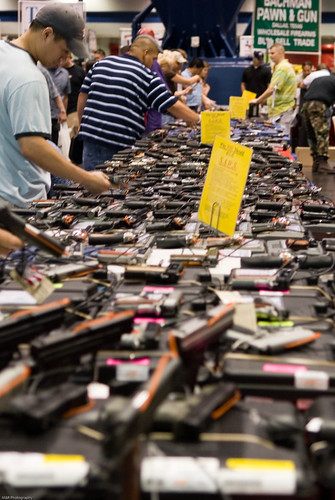
To Keep & Bear Arms.


So... Wait. Let me get this straight.

The Second Amendment of our United States Constitution reads as follows:


Now, let's backtrack about 23 words, back to those first four.

A well regulated Militia.

& we'll add the next bit, too, as that comma is clearly olde-timey; the only way the sentence makes grammatical sense is if the whole clause reads thus:

A well regulated Militia being necessary to the security of a free State...

Meaning: "Assuming that a well-regulated Militia is necessary to the security of a free State." Meaning, not only is the right to bear arms predicated on a well-regulated Militia (not three guys in a Dodge Durango)—or even a "Militia" being a system of organization that people are apt to utilize—but the intent of this Militia was that State could protect against State—as in, if Massachusetts decided to take over Connecticut (a choice, by the way, that I would have no problem with), Connecticut should be able to have guns to defend itself.

All right. That said, explain this to me:

An explosion of cases will keep courts busy for years defining gun control's new limits now that the high court has ruled that wherever they live, Americans have a right to possess guns, at least for self-defense in the home. (AP)
Really. Someone. Please. I am at a loss. This just quite literally does not make sense to me. Nowhere—nowhere—in the 27 words of that amendment does it indicate that arms are appropriate for home use. In fact, it indicates quite the opposite: a well regulated Militia—State defense, not self-defense. I feel like the court just redeclared drinking illegal, ruled that the way we count people includes fractions again: it's as if they ignored the first line of the amendment entirely.

Because, being a Fruity Liberal Wuss (or, as I like to put it, Someone Who Prefers That More People Stay Alive Than Not), I read this amendment as self-abolishing; once a well regulated Militia is no longer necessary to keep individual states free, then the government can infringe to its heart's content. Otherwise, why on earth would the framers of the Constitution have phrased it that way, with a conditional/descriptive clause at the start?

Because my point isn't provable beyond a reasonable doubt, I do accept the opinions of those who say the Framers intended every (able-bodied, male) citizen to have ready access to a gun. However, I would still contend that these "arms" were probably kept in a local storehouse somewhere, for use by the Militia—or, even if they weren't, even if everyone walked around brandishing muskets like so much Kleenex, that America in 1776 was a fundamentally, unforeseeably different place from the America we know & love. What I mean is: this law seems, on several levels, so insanely outdated as to boggle the mind.

Ultimately, I feel about the Constitution the same way I feel about the Bible: you implement the core tenets of each—be they Love Thy Neighbor or Checks & Balances—updating or forgetting entirely the rules that attempt to regulate specific behaviors—such as Sodomy or Gun Ownership—based on the understanding, which I don't think is a particularly hard sell, that progress happens. Destinies get Manifested, & it may be necessary for the Law of the Land to adapt. Put it this way: Thomas Jefferson could never in his wildest dreams conceive of anything like the AK-47, let alone buying one on the internet.

Unlike other socially incorrect laws (read: those involving slavery), this one has remained unchanged, never successfully challenged, because it's essentially impossible to make a clear case for its outdated status (that doesn't employ hyperbolic examples of former presidents & assault rifles) while "arms" are still around. Guns exist; the law talks about guns; ergo, the law ought to exist. But, really, let's take a look at what we've done:

Alito essentially repeated the formulation used by Justice Antonin Scalia two years ago that the court was not calling into question "long-standing prohibitions on the possession of firearms by felons or the mentally ill, or laws forbidding the carrying of firearms in sensitive places such as schools and government buildings."
This is seen as worthy self-congratulation: that we don't bring guns into schools or sell them to the mentally ill. That's considered restraint. That's appropriate regulation. I mean, I just— ...—

These are weapons.

They take lives.

They negate others' existence—void all on which we predicate anything, ever.

I don't care if the person in your sights is Bad or Intimidating or Trying to Steal Your Flatscreen TV: they deserve to be imprisoned, not shot. Even if you disagree with that as a general statement, I would hope you still see the importance of letting the state & its judicial system—or, at the very least, trained police officers—be the ones to make the fatal call.

Am I wrong? I mean, I understand that the game changes once there's a Violent Intruder in your very own home, but I also just don't see the practicality of personal gun ownership in this scenario. For example, assuming you’ve gotten the gun to Protect Your Family, the precautions necessary to truly ensure your child doesn’t blow his or her head off all but nullify any chance of its ready availability in an emergency. Of course, the only response to this foreseeable snag is to be less & less safe—to leave off those child locks, to carry a concealed weapon in public—which will only cause far more hassle, more violence, more death than this could ever be worth. Because honestly, I think what gun owner hopefuls are after is not actual Protection, but the illusion of protection, of security—&, honestly, the illusion of their own Heroism.

I find it frustratingly coincidental (curse you, O Great Screenwriter) that I just spent the other night thinking/writing about Vigilantism: it strikes me that those who would take advantage of this country’s ever-dwindling gun regulation probably think something along the lines of, “Well, I’ll get this gun, just in case; I won’t intend to use it much, but the second someone threatens me or my loved ones, I will spring into action!!! Ka-pow! Ker-chop! Shazaaam!!!!!!” Everyone wants to be the Hero, rightly lauded above all, responsible for having protected Life—paradoxically, of course, in this case, by dealing Death.

& consider this: were I awoken in the middle of the night by suspicious noises, I would absolutely take my (legally purchased) handgun out of my night stand, creep downstairs, & in my panic, probably end up shooting some local teenagers kicking a beer can around my front yard. My point is: 1) people who don’t function well under pressure shouldn’t have the power to kill on sight, 2) that the government can’t (either actually or practically) test for things like competence under pressure, & that therefore, 3) sanctioning guns in every American home—for this & reason upon reason—is effectively sanctioning hundreds of thousands of Accidents Waiting to Happen, & fatal ones at that.

If you feel you need more convincing—that you have a personal tale of gun success to trump my ham-handed examples, that you just like guns & don’t see the big deal—take a gander at the list of gun regulations that could be overturned under the new ruling. One that especially worries me is the misdemeanor domestic violence caveat: that most convicted of domestic violence are technically not serious enough felons to prevent them from now buying a gun, which means that children & spouses of abusive partners have a whole other level of Fear coming their way.

But really, though: let’s please return to the heart of this matter—what stops me from even really engaging in this debate, leaves my brain somewhere behind, bashing again & again against this impossibility like a wind-up toy into a wall: this decision is just not supported by the Constitution of the United States of America at it is written.

I don’t understand—I really just can’t, on many levels—but I can feel that something is rotten in our state, & it’s becoming increasingly clear that Heaven won’t direct it: what we need is a goddamn Well Regulated Militia.


Today's Headphone Fodder:


Rock 'n' Roll Never Looked So Beautiful—Semi Precious Weapons
(Live, Bowery Ballroom, 4/26/10).


To: spw@semipreciousweapons.com 4/27/10, 12:11 AM

Subject: Beautifully fucking done.

Let me start out by saying I have never written a fan letter. (I think they're sometimes silly.) However, let me also say, I have never seen a show as brain-bending, gut-wrenching, simply-fucking-transcendent from beginning to end as tonight at the Bowery Ballroom.

You encompass everything I love about music (megawatts of Raw Power coupled with glitter-glamourous stage aesthetic), & though I haven't been there from the very beginning, I've been with you a good long while, & it's so, so, so excellent to see you positively zooming upwards. Today our love, tomorrow the world—& so it goes.

You are glorious, & you are the future. You are shiny, make-up-spattered titans of rock-&-mother-fucking-roll. I salute you with all the love in my heart.

xxx,
Anneliese

You Love You: The Album. Now available on iTunes.
Do it. You will not be sorry.

Sunday, June 27, 2010

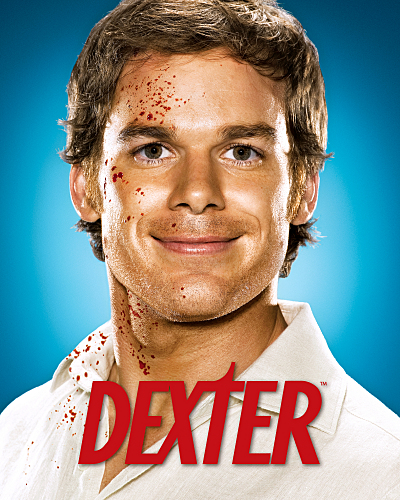
Vigilantism & the American Serial Killer. (Or, WTF Is Up With Dexter?)


When I first heard about Dexter—sometime around the end of its second season, when it was picking up real popularity—I got indignant. Massively so. "Are you kidding me?" I remember ranting in someone's face (retroactive apologies if it was yours), "First The Tudors makes King Henry VIII sexy, now we're making light of serial killing?! This is like a bad parody of American television! Has Christopher Guest taken over Showtime??"

Then, of course, boredom struck one afternoon some months later, & I decided to take advantage of my cable box: I watched all of the second & third seasons (yes, I skipped the first—a fault I later remedied) in a matter of days. Something about this show was just so addictive—the darkness of it; the garish, heightened quality of Miami; the constant suspense that Dexter (Blood Spatter Analyst By Day, Serial Killer By Night!) is ever closer to getting found out—while, at the same time, I had the palpable experience of not enjoying what I was watching. Part of this dislike, I'm sure, stems from the constant brightness & heat of the Florida setting, which is an atmosphere that I personally could really do without (I'm very much an all-four-seasons lady). Part of it, too, is due to the frustrating dearth of interesting, relatable minor characters—&, consequently, the frustrating presence of boring, unsympathetic ones—especially Deb, Dexter's foul-mouthed, anorexic-skinny stepsister, who is both badly acted by an over-emphatic Jennifer Carpenter & badly written into exactly the kind of "Loud & Obnoxious, Ergo Positive Female Character" archetype that drives me bananas.

Still, there's something deeper than setting or supporting actors, something stranger & skin-crawling-er & not quite right—& I do think it goes back to what I originally viewed as problematic, then wrote off as interesting & satirical: the fact that we end up rooting for, or believing in at all, a positively-represented mass-murderer.

Or—well—It is, in fact, indicative of my state of mind (& extreme personal interest in the subject) that I understand how "mass-muderer" is a misnomer for our death-dealing protagonist, despite the fact that he commits a massive amount of murder: technically speaking, while both serial killers & mass-murderers kill repeatedly & often, a serial killer is someone more methodical, more compulsive. Think Mickey & Mallory Knox from Natural Born Killers vs. Hannibal Lecter: the duo kill indiscriminately, constantly—even joyously—for the fuck of it, while the doctor is portrayed as particular, obsessive, & downright creepy. Dexter is crafted specifically to fit the Lecter model (who was himself, of course, modeled after certain big names in fatal American depravity—Fish, Gein, Gacy): he performs his killings in a ritualized setting (a plastic-coated room & victim); he collects souvenirs of the crime (blood drops on slides, hidden in a box behind his air conditioner); &, most importantly, he feels compelled from somewhere deep inside him—somewhere primal, uncontrollable—to do violence.

The basic backstory of this urge—intricacies of which are ever-unfolding, still to this season—goes something like this: once upon a time, young Dexter was abandoned inside one of those truck-trailer-storage-units with multiple dead bodies, left near-naked & alone in a vast pool of blood for some unthinkable amount of time. Because of this trauma, he now fetishizes blood & death to such a degree that he can only ever feel catharsis—part-spiritual, part-orgasmic, it seems—when plunging a Bowie knife into someone's chest. Harry, a policeman & Dexter's adoptive father, recognizes his son's violent tendencies &, rather than seek therapeutic help, trains him to kill (without a forensic trace) only those who really deserve it—that is, violent criminals whom the negligent Justice System lets back out on the street.

Thus, Dexter (italics or no) represents the culmination of two American-purported phenomena I find fascinating—specifically, the Platonic, idealized Serial Killer & the glorified Vigilante. The fact that he has achieved such popularity makes him a perfect point of study—& the fact that I find these issues here botched explains my uncharacteristic dislike for such a lauded crime show.

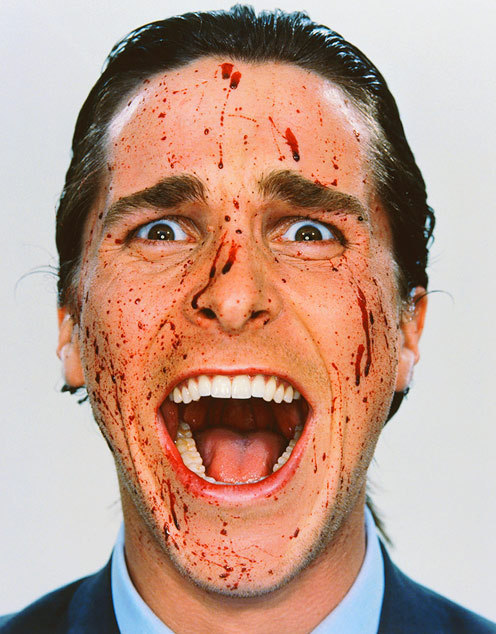
To begin: it seems that we as human beings love to look into the heart of Evil (especially we American human beings into the heart of a Serial Killer)—& that, at least in my experience, we do it for two simultaneous, if contradictory reasons. First & most obvious, there is a serious Othering that takes place: "Eew, how gross! How scary! How bizarre that these fucked up people feel compelled to do such terrible things! Thank God I'm not like that." It's a way to eschew our darker impulses by confronting them, then projecting them onto someone like Lecter or Patrick Bateman. Still, there is a way in which it's crucial that these evildoers are people, are sympathetic to us on that basic level; it's not nearly as interesting—or psychologically cathartic—to watch a lion maul a zoo attendant. Part of this pleasure in watching human depravity seems to stem from daring ourselves towards the darkness, examining up close the ever-dwindling thread—one cerebral chemical, one childhood mishap—that separates us from what we fear.

Take, for example, the case that gives me chill upon chill—one that I became a little obsessed with this past year, to catastrophically unproductive results—that of Jeffrey Dahmer. Though you've probably heard of Dahmer's many atrocities, here's a basic overview: he killed 17 young men, as far as we know, always after/as a result of pursuing them sexually. His intent, especially towards the end, was to create a "zombie" partner—someone who would (could) never leave him; he would perform haphazard lobotomies with hydrochloric acid on those whom he could lure back to his apartment. When these procedures inevitably went awry, he would dismember the bodies, keeping certain parts as trophies & even engaging in occasional cannibalism.

The case is horrifying. The man is horrifying. But—& please, please understand the trepidation with which I phrase this section—there is something tragic, something understandable about the root of his crimes: as he tells it, he bludgeoned his first victim to death because "the guy wanted to leave & I didn't want him to leave." Though no balanced, healthy person would ever respond as he did, I can only imagine that every person, balanced or no, has experienced this feeling of desperation as someone walks out the door. Moreover, Dahmer was gay in a time when homosexuality was still unacceptable to the mainstream; with societally-legitimized cause, he was afraid of being eternally Alone. Of course, of course—of course—the lengths to which he went—the unspeakable violence, the repulsive disregard for human life—are in no way sympathetic or forgivable, nor should they be. But there is something terrifying, revealing—something necessary about the extent, small though it may be, to which Dahmer is, at his core, relatable.

What Dexter does, though, is take this intense, complex sympathy & trivialize it, making it either a joke or a banality, depending upon the scene. The premise of the show, ultimately, seems to be, "Serial Killers: They're Just Like Us!"—almost as if we're watching a Discovery Channel special. The question of whether wrongdoers should be painted sympathetically is certainly an interesting one—an unavoidable one, I would say—but the approach that Dexter takes is ham-handed & odd, glossing over the soul-wrenching confusion that it takes to find oneself in Evil, to merge gently with the darkness while still keeping enough boundaries intact—preferring instead to assume our complicity on a very surface level & make a coy title sequence that portrays Dexter's everyday actions as latently violent, tongue always firmly in cheek.

However, it is important to remember that Dexter is not just a killer. Oh, no: he kills for Right; he kills for Justice; he kills only those who have killed—people unpunished for the suffering they have caused. Eye for eye, tooth for tooth—he represents the personified, self-interested Lethal Injection. & this seems to be an aspect of the show that most viewers who might be inclined to disagree with such policies (read: myself included) glossed over during the first couple episodes, just so relieved to have an easy excuse for our sympathy. It's okay that he kills people: they're bad people. It makes sense. If, though, we separate out these two issues—the sympathy & the killing of wrongdoers—we can see that Dexter is, on the one hand, a show that simplifies the relatability of serial killers to a clever premise & that, on the other, subtly promotes what is often seen as a conservative viewpoint: that killers deserve to die.

& this, I think, is where a good deal of my frustration comes from: the unquestioned glorification of vigilantism, which is itself such a bizarre, paradoxical issue, as it forces us to distinguish between Violence For Good & Violence For Evil—or even to recognize that such a distinction can be made. The killer who kills killers necessarily muddles in such hopeless ethical limbo that it seems almost impossible to render one a hero—& yet we do, constantly: with Batman, with The Boondock Saints, & any number of flashy action movies starring Men Outside the Law.

Because, as I see it, there is something inherently American about the character of the Vigilante. He's in our second amendment, clutched desperately in the hands of Southern Tradition—& just as equally in the dreadlocks & piercings of our Anarchists, tattooed limbs & stolen clothes. In a country founded on rebelling against authority, whose basic tenets include a clause allowing its citizens to Revolt, it seems only right that we be skeptical of government, ready always with our Well Organized Militia for some Violent Upheaval. In less hyperbolic terms, it seems especially encouraged in this country to never let Authority go unchecked, to be aware of & vocal about the ways in which Big Government's brand of Justice is inefficient & impractical & screwing us all over—& the next logical step, of course, is to take action.

However, most of us stay home & mind our own business—maybe write a letter or two, hoist a harmless picket sign—because we recognize that we don't live in Gotham City, that we don't have a cartoonish Bad Guy who will take too long making his dramatic world-ending speech. Most of us, in fact, are not familiar in any way with serious, repetitive violent crime; we leave that to the fiction-makers, again projecting out a piece of our inner darkness, our Revenge, this time onto the superheroes & rogue hitmen.

Perhaps, then, this is why Dexter is so very popular, even when riding on such a shaky premise: he represents an acceptable scapegoat for our violent desires by rendering them justifiable, making it okay to root for his compulsion, his sickness to take another life. Unlike the complex & frightening humanity of the actual serial killer, Dexter offers us the illusion of guiltless sympathy because he is Right; he allows us to take pleasure both in senseless violence & in revenge—those primal instincts lurking somewhere behind our bones—free of any ethical or intellectual constraints. Ultimately, operating on this level of thoughtlessness, though momentarily cathartic, just leaves me feeling icky.

There is a reason we leave vigilantes confined to unrealistic, heightened fiction; when we attempt to modernize or explain them, as far as we can tell, they end up looking like Dexter: compulsive killers, blood-spattered & smiling.


Today's Headphone Fodder:


More remixes—this one particularly excellent. This song is one of those ones you almost can't not like—however you may feel about Passion Pit or Wispy Voiced Electronic Music in general, & I would assert that this remix makes it, in fact, far, far cooler.

Furthermore: through some Random Insomniac Clicking, I discovered this free EP of some great electronic-y tracks: remixes, mash-ups, straight techno, including a version of Das Racist's infamous Combination Pizza Hut & Taco Bell. Enjoy.

Saturday, June 26, 2010

I Am Okay With / Not Okay With: Ill-Advised Sequels Edition.


I mean, in all honesty, most sequels are ill-advised: there did not, no matter what anyone says, need to be 3 Pirates of the Caribbean movies. (Or 97 Land Before Times.) Not only are sequels incredibly difficult to write, even at the level of basic plot construction (unless the original was based on a serial story, à la Spiderman), but to make matters worse, most studios will hire an entirely different writer/director/lead actor & then just throw a dumptruck's worth of money at the project, pasting over heinous gaps by crowbarring in as many groan-worthy references to the original as humanly possible. So now, just for fun, Hollywood has decided to fuck with two of my very favorite movies—which, so the irony goes, were favorites because they were part of the dying breed that is the skillfully written, autonomous comedy. Without further ado, today's contenders are:


Yes, dear Reader, today's choice is a tough one (both of these sound really, depressingly bad), but in an effort to inject my life with a little positivity, I'm forcing myself to decide which one I hate slightly less. So, in one corner, we have a Mean Girls sequel—or, as I would prefer it titled, Mean & Meanerer: Clichés Gone Wild—which, at the moment, includes cast members from the 10 Things I Hate About You TV mishap, a director whose only work of note is a nameless acting part in Clockstoppers (or, her one episode of Lipstick Jungle), & a plot involving friendship incentivized by college tuition. In the opposing corner, of course, sits a continuation of School of Rock—a movie that not only needs no continuation, but which, in fact, stopped exactly at the moment before the joke got old. Really, within the minute. (The joke, of course, being that Jack Black plays himself, as usual—or, that children can act & sometimes play musical instruments.) Even that improvised AC/DC credits sequence was bordering on bad; it was artfully fade-to-blacked & then some. Also, the day I see a movie with "America Rocks" in the title—Schoolhouse Rock callback though it may be—is the day I hang myself.

So, which upcoming sequel inspires slightly less despair? Survey says...


I Am Okay With: School of Rock 2: In Case You Forgot How Jack Black Is.

... But just barely. & only because it has one potential saving grace: it's actually being written by Mike White. Which by no means guarantees its success; I remain of a mind that School of Rock is necessarily sequel-less, & that anything anyone tries, even if they were to seance in Billy fucking Wilder, will be hopelessly awkward & unfortunate. That said, at least they've had the decency to put Mike White in charge: he singlehandedly thought of & wrote the original as a vehicle for his friend & neighbor Jack Black (no surprises there...), so if anyone could come up with a mildly passable script, it would probably be the cross-dressing, blood-sucking incubus from Maggotdeath (that is, him). Also, Richard Linklater—AKA, genius upon genius, stewed in a genius-y broth—will be returning to direct, rumor has it. So, I mean, yes, fine, if they can really reassemble the original White-Black-Linklater (one of these things is not like the other...) team, then at least the movie has a prayer.

Still, with altogether different kids & a premise that involves road-tripping across America for God knows what reason—coupled with the fact that everyone was okay with ending the original story as it was—the future of this film continues to ride the tightrope between "iffy" & "complete fucking disaster that drives Anneliese into a pit of deep, existential darkness, from which she can emerge only to wring the pillowcase of her tears, shake her fists at the heavens & cry Is nothing sacred????" Yeah, somewhere in there.


I Am Not Okay With: Mean Girls 2: Straight to DVD Edition.

(Dear God. Where do we even start? I'm actually dumbfounded—dumbfounded, I say!—by how depressing the thought of this movie is. I guess I'll start with everyone's favorite safe bet: the Wild Generalization.)

Perhaps the greatest sequel flaw—one that has been repeated time & time again, it seems—is the failure of various filmmakers to understand what was great about their movie in the first place, thus causing them to reprise or heighten stupid, inconsequential aspects while losing entirely the flair that made you love the concept at all. (I will never forgive you, Jerry Bruckheimer.) You'll find this phenomenon recurrent in most artists who elaborate on (or even talk about) their own product—& rightly, as it's often difficult to predict/gauge audience reaction. However, you'd think that these movie moguls do enough focus-grouping / read enough reviews / generally get enough feedback on their endeavors that they would understand how to glean the Good factor off a movie for insertion into its sequel. I mean, I understand that Hollywood is a money-making business at its core, but sometimes it's just too depressing to witness the entertainment-bereft depths to which they'll sink for a quick buck from the lowest common denominator.

One such plunge is this upcoming Mean Girls project. Because the absolute last thing that made the first Mean Girls great was its core subject matter; popular girls—even in the traditional, appearance-driven tripod clique—have been getting their comeuppance since the late 80s. What made Mean Girls special was the witty modern approach, the offbeat humor that still somehow rang true with today's teenagers; it was fresh, it was hilarious, & now those who longed for some sort of reprisal are left with low budgets & inexperience—hackneyed references & sad graspings back at the original writer's former glory.

To make matters worse: while it's not explicit in any of the announcement articles that the project will go straight to DVD, the production experience of the cast & crew essentially speaks for itself: The Naked Brothers Band: Nickelodeon's Creepiest-Sounding Show for the director, & Camp Rock: Disney's Singlehanded Poisoning of an Entire Generation Against Actual Music for its star. (Also, as I think I already mentioned, the abysmal nose-dive of a rip-off series 10 Things I Hate About You will be contributing several cast-offs.) In any event, the "V" next to its title on IMDb is a pretty sure bet; we can all look forward to seeing this in the bargain bin in our local CVS is a year or so. Poor Tina Fey—I weep for you today, my lady.


Ugh. No fun, my babe, no fun—that's for sure. Speaking of music, before we move on to the next section, let's all cleanse our mental palettes with the greatest news headline ever, ever, ever, shall we?


Also, this:


Much better. Now...

Today's Headphone Fodder:

All of the Gaga brouhaha (& this. This, too.) around the house lately has got me in a bit of a crap pop funk—doomed to dull my soul along to the poorly rolled Rs of Alejandrrro forevermore—until I re-found this stashed away in my iTunes.


Here's some paradoxical reasoning for you: because I hate the song Telephone so much, I desperately want you to hear this remixed mash-up. See, this track is incredible—truly—& the fact that it was created from such depressingly threadbare material is a feat among feats. The telephone noises, the Metallica (which fits perfectly), the pulse-throbbing beats... It's one of the most fantastically danceable songs I've heard in a long, long time—& so well done on this DJ's part. (Give it until at least the first post-chorus to kick in all the way...)